

When it is necessary to resume power transmission, in order to make the speed of the car and the engine speed changes more smoothly, should be appropriate to control the relaxation of the clutch pedal speed, so that the driven disc in the pressure of the spring under the action of the pressure to move to the left, and the flywheel to restore the contact, and the contact surface of the two between the pressure gradually increased, the corresponding friction torque also gradually increased. When the flywheel and the follower disc are not close, the friction torque is relatively small, the two can not be synchronous rotation, that is, the clutch is in a slipping state. With the gradual increase of the degree of tightness of the flywheel and the slave disc, the two rotational speeds are gradually equal. Until the follower disc and flywheel completely engaged and stop slipping, the car speed is proportional to the engine speed.
The maximum torque that can be transmitted by a friction clutch depends on the maximum static friction torque between the friction parts, which in turn depends on the friction force between the friction surfaces, the friction factor and the number and size of the friction surfaces. The maximum static friction torque is therefore a constant value for clutches of a certain construction. When the input torque reaches this value, the clutch slips, thus limiting the torque transmitted to the drive system to prevent overloading.
As can be seen from the above working principle, the friction clutch is mainly composed of four parts: the active part, the driven part, the pressure mechanism and the manipulation mechanism. The active and driven parts and the pressure mechanism are the basic structure to ensure that the clutch is in the engagement state and can transmit the power, while the clutch's manipulating mechanism is mainly a device to make the clutch disengage.
In order to ensure the transmission of the engine maximum torque under the premise of reliable, the clutch structure should be able to meet the master and slave part of the separation is complete, soft engagement, the slave part of the rotational inertia should be as small as possible, the heat dissipation effect is good, the operation of the light, good dynamic balance and other basic performance requirements.
One of the basic functions of the clutch. Is when the transmission shift interrupt power transmission, in order to reduce the impact between the gear teeth. If the transmission with the first - shaft connected to the contact is disengaged, the clutch slave part of the larger moment of inertia is still input to the transmission, the effect is equivalent to the separation is not complete, can not play a good role in mitigating the impact of the gear teeth between the gears.
In the process of using the car, the driver manoeuvres the clutch a lot of times, which leads to clutch
This results in a large amount of heat being generated in the clutch due to the frequent relative slippage between the friction surfaces. The softer the clutch engagement, the greater the heat generated. If this heat is not dissipated in time, it will have a serious effect on the work of the clutch.
Working principle of the clutch (II)
Popular Products

GRTECH 231010910 High Quality Clutch Cover for John Deere
231010910 12inches Tractor Clutch Cover Clutch Pressure Plate for John-Deere

GRTECH M104100-2 Excellent Clutch Kit For Mack
M104100-2 Clutch Parts Truck Clutch Kit for America Series Heavy Duty Truck

GRTECH 107683-4CB Good Performance Clutch Kit For MACK
Heavy Duty 14 Clutch assembly for 1-3/4 input shaft. 8 springs and 4 paddles for up to 680 Lb/Ft torque.
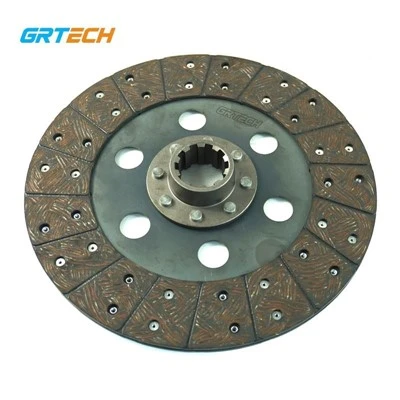
Grtech 320964550 Factory Supply Clutch Disc For Laverda
Grtech 320964550 clutch disc engineered specifically for Laverda combine harvesters, maintains a stable dynamic
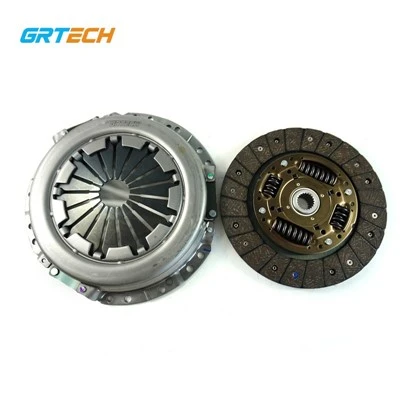
Grtech 228mm Premium 7700851250 Clutch Disc And 7700864581 Clutch Cover For R...
Grtech premium 7700851250 clutch disc and 7700864581 clutch cover fit Renault 1.4L–1.8L models with 228mm single-disc
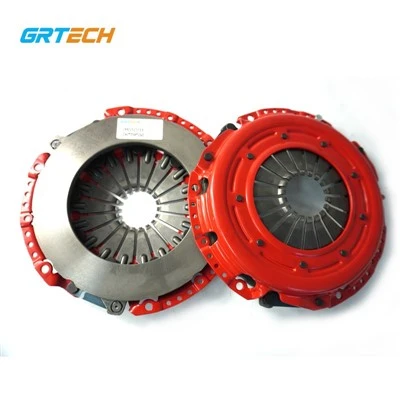
GRTECH 240×158×260mm 000252111 High-Performance Racing Clutch Kit
GRTECH 240×158×260mm 000252111 Racing Clutch Kit is engineered with a nano-ceramic reinforced aramid friction compound