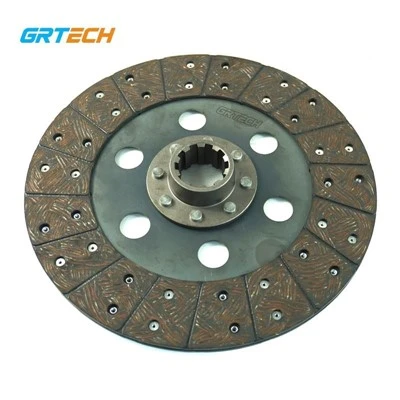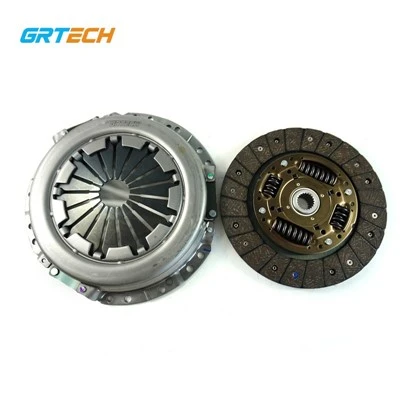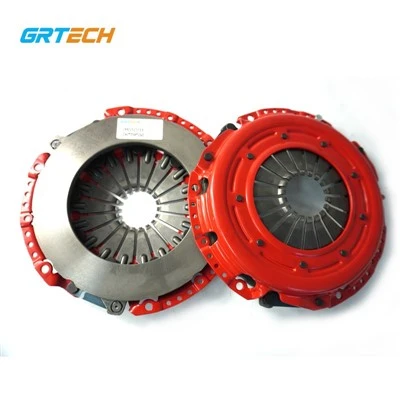
The principle of automobile clutch is as follows:
1, depress the clutch of the non-linkage: when the vehicle starts, the driver depresses the clutch, the movement of the clutch pedal pulls the pressure plate backward, that is, the pressure plate and the friction plate separation, at this time the pressure plate and the flywheel are not in contact at all, there is no relative friction;
2, without depressing the clutch full linkage: when the vehicle is in normal driving, the pressure plate is tightly squeezed against the friction plate of the flywheel, at this time the friction between the pressure plate and the friction plate is the largest, and the input and output shafts maintain relative static friction between them and the two rotational speeds are the same;
3, partially depressed clutch half linkage: pressure disc and friction plate friction is less than the full linkage state. The friction between the clutch pressure plate and the friction plate on the flywheel is a state of sliding friction, the rotational speed of the flywheel is greater than the rotational speed of the output shaft, and the power transmitted from the flywheel is partially transferred to the gearbox. This state is equivalent to a soft connection between the engine and the drive wheel.