Wind Turbine Brake Pad
I. Basic Definition and Core Functions
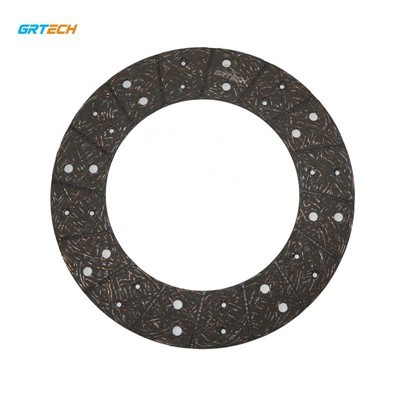
A wind turbine brake pad is a key safety component in the mechanical braking system of wind turbine units. It is mounted on the brake caliper and works in coordination with the brake disc. Through friction, it converts the kinetic energy of rotating parts into heat energy for dissipation, thereby realizing the deceleration, braking and locking of the wind turbine.
Core Functions
Emergency Braking: Rapidly shuts down the unit under emergency conditions such as over-limit wind speed and power grid faults to prevent equipment damage.
Normal Shutdown: Stops the rotor smoothly in response to control commands to facilitate maintenance and inspection.
Locking Function: Keeps the nacelle or rotor fixed in a shutdown state to ensure personnel safety.
Damping Control: Provides stable steering resistance in the yaw system to avoid excessive rotation of the nacelle.
II. Classification and Application Scenarios
2.1 Classification by Mounting Position
| Type | Mounting Position | Main Functions | Working Characteristics |
|---|---|---|---|
| Main Shaft Brake Pad | Main Shaft / High-speed Shaft | Rotor braking, emergency shutdown | Requires high load resistance, high temperature resistance and high friction coefficient |
| Yaw Brake Pad | Yaw System | Nacelle locking, steering damping | Low working pressure, frequent start-stop operation, long-term outdoor service environment |
| Pitch Brake Pad | Pitch System | Blade angle locking | High precision, high reliability and fatigue resistance |

2.2 Classification by Driving Mode
Hydraulic Brake Pad: The most widely used type. Braking force is provided by a hydraulic system, suitable for high-power wind turbines.
Pneumatic Brake Pad: Applied to medium and small-sized wind turbines, featuring simple structure and fast response speed.
Electromagnetic Brake Pad: Mostly used for auxiliary braking, with power-loss braking function for high safety and reliability.
III. Working Principle
Trigger Phase: The control system detects a braking demand (e.g., over-limit wind speed, fault signals, maintenance commands).
Driving Phase: The hydraulic/pneumatic/electromagnetic system activates, pushing the brake caliper to bring the brake pad into contact with the brake disc.
Friction Phase: Friction is generated between the brake pad and brake disc, converting kinetic energy into thermal energy.
Deceleration / Stopping Phase: Continuous friction decelerates the rotor or nacelle until it comes to a complete stop.
Locking / Releasing Phase: Maintains the locked state after braking is completed, or releases the brake as instructed.