

Introduction and solution analysis of stamping forming process of automobile clutch shell
The clutch is an important part of the vehicle transmission system, generally composed of the clutch cover assembly and the driven disc two parts, the driven disc assembly is connected to the transmission input shaft, the clutch cover assembly is connected to the engine flywheel by bolts. The clutch assumes the role of interrupting, combining, changing gear and alleviating load impact of the vehicle power output, and working with the engine flywheel synchronous high-speed rotation, so the clutch cover requires sufficient stiffness and dimensional accuracy, in order to heat dissipation needs, we must design an appropriate ventilation window.
The current heavy-duty truck engine power has reached 370 kW or more, the clutch torque capacity to more than 4 000 N•m, its structural strength requirements are very high, the shell manufacturing needs to use high-strength thick plate production, usually heavy-duty trucks with clutch plate thickness ≥5 mm. As a high-speed rotating part, the clutch has high dynamic balance requirements, and the assembly matching degree of the transmission system is also required to be high, so its dimensional accuracy requirements are also high, usually the tolerance requirements are < 0.5mm. The clutch housing has the characteristics of complex structure, compact space, high strength and dimensional accuracy. Due to the high structural strength and dimensional accuracy requirements of the clutch, the early heavy-duty truck clutch shell is produced by casting process, with the development and progress of punching technology, the use of pressed clutch shell instead of cast shell, which has played a huge advantage in improving production efficiency and reducing costs, and promoted the development of autonomous clutch. But the clutch because of its high strength requirements, so the use of thick plate flanging forming to achieve the purpose of high strength, lightweight, low cost.
Introduction and solution analysis of stamping forming process of automobile clutch shell
Popular Products

GRTECH 231010910 High Quality Clutch Cover for John Deere
231010910 12inches Tractor Clutch Cover Clutch Pressure Plate for John-Deere

GRTECH M104100-2 Excellent Clutch Kit For Mack
M104100-2 Clutch Parts Truck Clutch Kit for America Series Heavy Duty Truck

GRTECH 107683-4CB Good Performance Clutch Kit For MACK
Heavy Duty 14 Clutch assembly for 1-3/4 input shaft. 8 springs and 4 paddles for up to 680 Lb/Ft torque.

Grtech Excellent Racing Clutch Kits With Push/pull Designs, Twin/triple/multi...
Grtech Racing Clutch Kits conquer all motorsport challenges. Our range features push/pull designs,
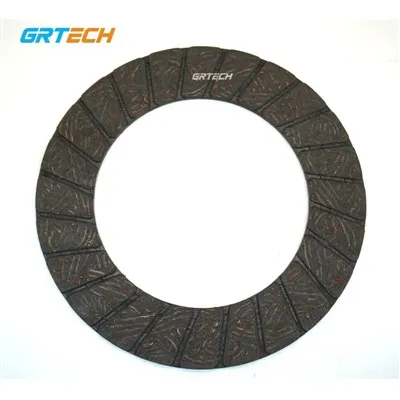
GRTECH GRT-0419A Factory Supply Clutch Facing For All Models
Grtech GRT-0419A clutch facing features steady friction performance with a small dynamic-static difference. It delivers
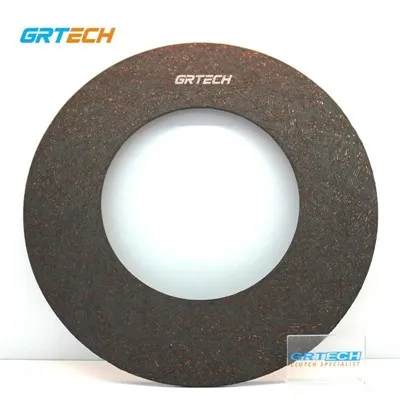
GRTECH GRT-510D High-performance Clutch Facing For All Models
Engineered by Grtech, GRT-510D clutch facing features advanced friction technology with copper-enhanced thermal