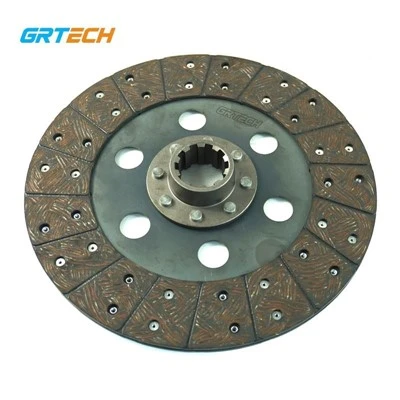
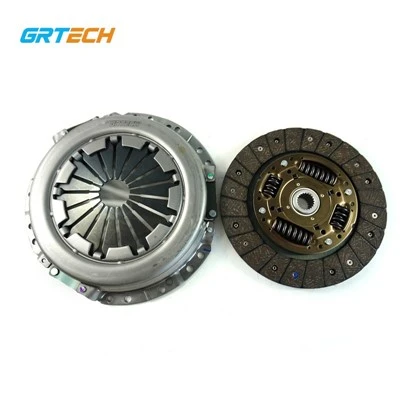
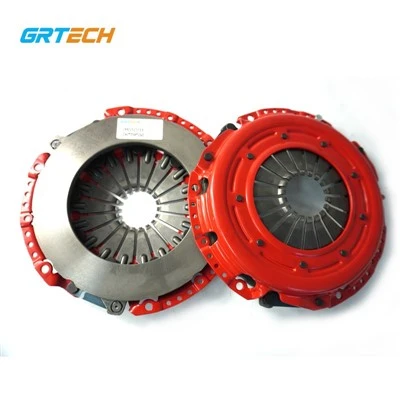
| 1. Formula and Raw Material Preparation |
Mix reinforcing fibers (aramid/metal/ceramic), binders (phenolic resin), fillers (graphite/copper powder) and lubricants in accordance with the DUE formulation (e.g., high wear-resistant AOM / heavy-duty ceramic) |
Fiber proportion: 40%-60%; Resin proportion: 15%-25%; Mixing uniformity error ≤ 3% |
Determines friction coefficient, heat resistance and service life |
| 2. Fiber Impregnation and Drying |
Perform double impregnation of fiber yarns/cloths in resin + size, then dry until the moisture content ≤ 5% |
Drying temperature: 80-120℃; Drying time: 20-40min |
Improves the bonding force between fibers and matrix, and avoids air bubbles |
| 3. Sliver Making, Winding / Preforming |
Calender and glue the impregnated fiber yarns → make slivers → wind into circular blanks; or pre-press into embryo sheets |
Sliver width error: ±0.1mm; Uniform winding density |
Ensures the consistency of sheet shape and thickness |
| 4. Hot-press Vulcanization Molding |
Put the blank and steel substrate into the mold, then heat and pressurize for curing; for heavy-duty DUE products, parameters can be increased |
Temperature: 160-180℃; Pressure: 25-35MPa; Pressure holding time: 30-45min |
Realizes resin cross-linking and curing, forming a dense friction layer |
| 5. Post-curing Heat Treatment |
Conduct secondary heating after demolding to eliminate internal stress and improve thermal stability |
Temperature: 120-150℃; Heat preservation time: 2-4h |
Reduces the risk of high-temperature fade and stabilizes the friction coefficient |
| 6. Precision Machining |
Grind the thickness (tolerance: ±0.05mm), drill holes / slot (for heat dissipation/dust removal), and remove burrs |
Flatness ≤ 0.1mm; Rivet hole position error ≤ 0.2mm |
Ensures installation compatibility, optimizes heat dissipation and engagement smoothness |
| 7. Surface Treatment and Marking |
Remove dust, spray protective film, and print DUE model / applicable vehicle model / torque grade |
Film thickness: 5-10μm; Clear and wear-resistant markings |
Prevents rust, enables traceability and facilitates model selection |
| 8. Quality Inspection and Packaging |
Carry out dimensional inspection, friction coefficient test (0.3-0.4 for conventional products), heat resistance / torque verification and non-destructive testing |
Defective product rate ≤ 0.5% |
Ensures compliance with GB/T 5764 standard and DUE performance indicators |