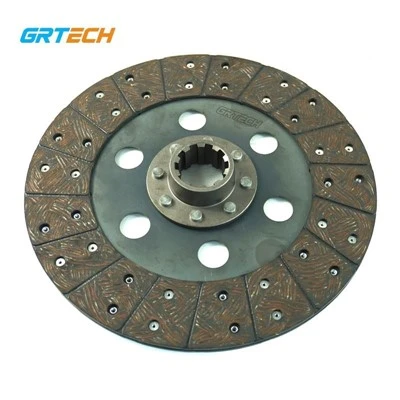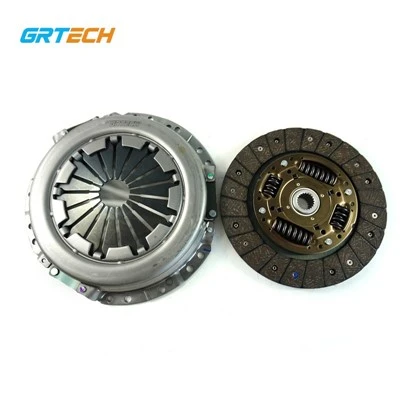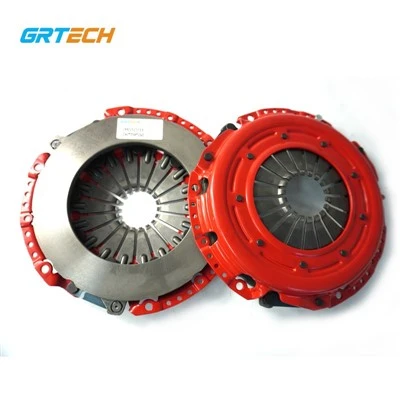
Key Process Adaptation Points for DUE Facing Sheets
Customized Formulation: If the DUE adopts the manufacturer's high-wear-resistance/heat-resistance formulation, it is necessary to adjust the fiber ratio (e.g., increase aramid/ceramic fibers) and filler type (e.g., high-purity graphite/metal powder). The hot-pressing temperature can be raised to 175-180℃, and the pressure-holding time should be extended by 5-10 minutes.
Precise Dimensional Control: If the DUE is dedicated to specific vehicle models, it is required to strictly match the outer diameter/inner diameter/thickness (e.g., outer diameter 220-320mm, thickness 3-5mm). The flatness of the substrate should be ≤0.08mm to avoid slipping or jittering.
Enhanced Quality Traceability: As a customized model, it is necessary to mark the batch number, material code and applicable VIN range during the labeling process, so as to facilitate foreign trade/after-sales traceability.
Comparison of Two Mainstream Processes (for DUE Selection Reference)
| Process Type | Advantages | Disadvantages | Applicable DUE Scenarios |
|---|---|---|---|
| Calendering and Rubber Lamination Process | Strong adhesion, uniform thickness, excellent NVH performance | Slightly high cost, medium efficiency | Passenger car DUE (ride comfort priority) |
| Impregnation and Drying Tower Process | Short process flow, high efficiency, suitable for mass production | Relatively wide thickness tolerance (±0.1mm) | Commercial vehicle DUE (heavy load, low cost) |