Diaphragm Spring(二)
Working Principle
The working process of the diaphragm spring directly corresponds to the engaged and disengaged states of the clutch:
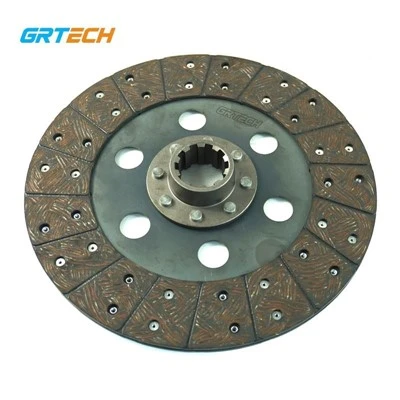
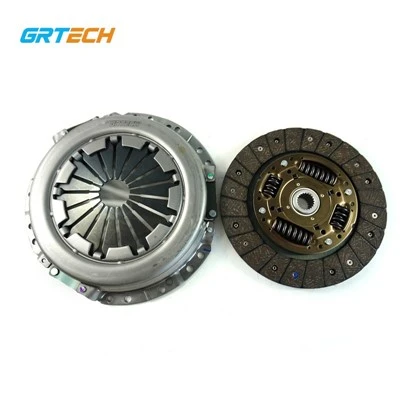
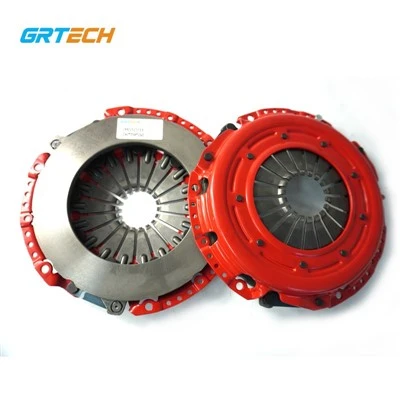
Clutch Engaged StateWhen the engine is running, the diaphragm spring, under its own elastic force, tightly presses the pressure plate against the clutch friction disc, making the friction disc fit closely with the engine flywheel, thereby transmitting engine torque.In this state, the clamping force of the diaphragm spring is stable, ensuring the reliability of power transmission.
Clutch Disengaged StateWhen the clutch pedal is depressed, the release bearing pushes the ends of the diaphragm spring's release fingers forward, causing the diaphragm spring to undergo reverse elastic deformation with the supporting rings as fulcrums. This drives the pressure plate to move backward, separating the friction disc from the flywheel and pressure plate, and interrupting power transmission. Gear shifting can then be performed.
IV. Core Advantages
Compared with traditional coil spring clutches, diaphragm spring clutches have significant advantages:
Compact StructureIntegrating the functions of the pressure spring and release lever, it reduces the number of parts and the axial dimension of the clutch assembly, achieving a notable lightweight effect.
Stable Clamping ForceThe clamping force of the diaphragm spring changes minimally with wear. Even after the friction disc is worn, sufficient clamping force can be maintained to avoid slipping.
Light Pedal OperationLess pedal force is required for disengagement, effectively reducing driving fatigue, which is particularly suitable for compact passenger vehicles.
Excellent High-speed PerformanceAt high rotational speeds, the diaphragm spring is less affected by centrifugal force, and the clamping force will not drop significantly due to centrifugal force, ensuring more stable power transmission.
V. Materials and Wear Characteristics
Material RequirementsIt must be made of high-strength spring steel with a high elastic limit (e.g., 60Si2MnA) and undergo heat treatment (quenching + tempering) to ensure wear resistance and fatigue resistance.
Wear PerformanceAfter long-term use, the diaphragm spring may experience elastic attenuation (insufficient clamping force leading to clutch slippage), deformation or fracture of release fingers (incomplete disengagement causing difficulty in gear shifting), and surface wear or cracks (caused by stress concentration). It is one of the core wearing parts of the clutch.
VI. Application Scenarios
The diaphragm spring is the mainstream configuration for dry clutches in passenger vehicles. Almost all manual-transmission household cars and dry dual-clutch models adopt the diaphragm spring structure. Clutches of some light commercial vehicles also use diaphragm springs to optimize the operating feel.