Diaphragm Spring
The diaphragm spring is a core elastic component of automotive clutches (especially dry clutches). It integrates the dual functions of the "pressure spring" and "release lever" found in traditional coil spring clutches, and is widely used in the clutch assemblies of Manual Transmission (MT) and dry Dual-Clutch Transmission (DCT) vehicles.
I. Core Definition
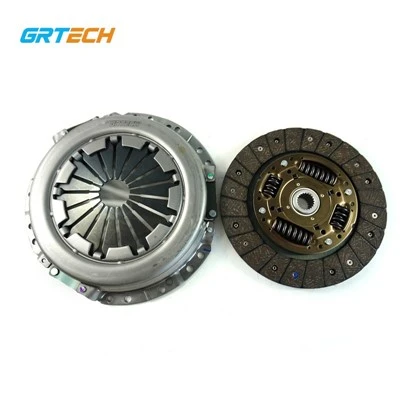
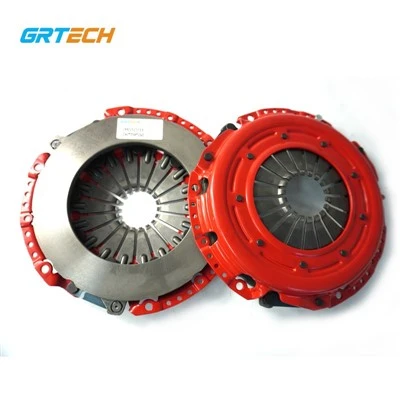
A diaphragm spring is a disc-shaped thin-plate spring, usually stamped from high-quality spring steel. Its cross-section is dish-shaped, with several radial slots cut in the middle to form multiple elastic lever arms. Mounted between the clutch cover and the pressure plate, it relies on its own elastic deformation to achieve power engagement and power disengagement of the clutch.
II. Core Structure
Disc-shaped Spring Main BodyThe overall shape is a conical disc. When not subjected to external force, it is in a pre-compressed state, providing the clamping force required for clutch engagement.
Radial Slots and Release FingersUniform radial slots are cut along the circumference in the middle of the spring. The ends of the slots are provided with circular holes (to prevent cracking due to stress concentration). The parts between the slots form release fingers, which act as the release levers of the clutch.
Supporting Rings and RivetsThe diaphragm spring is fixed to the clutch cover via supporting rings (or rivets) on both sides. The supporting rings serve as the fulcrum points when the diaphragm spring deforms.