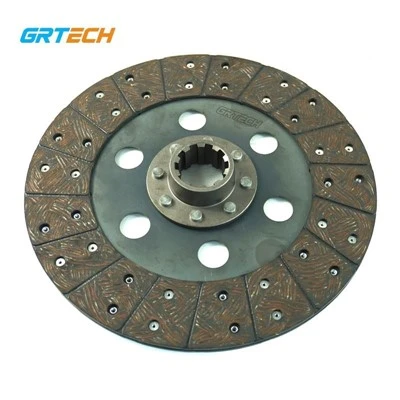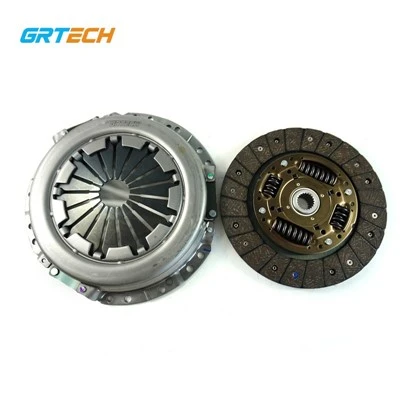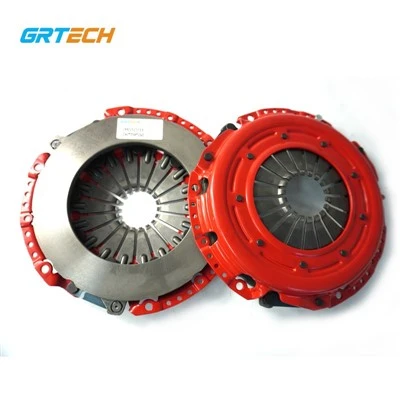
Correct Usage and Maintenance Methods for Paper-Based Clutch Facing
The core characteristics of paper-based clutch facing are excellent smoothness and heat dissipation, yet it has weak oil contamination resistance and limited torque bearing capacity. Its usage and maintenance must be carried out in accordance with its material properties, with specific operations as follows:
1. Standard Correct Usage
Avoid Overloading and Aggressive Driving
Paper-based materials have low mechanical strength and cannot withstand high-load impacts. In daily use, avoid long-time climbing under full load and frequent sudden acceleration starts to prevent delamination and cracking of the facing due to excessive torque. Meanwhile, do not coast with the clutch pedal half-depressed, as this will cause prolonged semi-engaged friction between the facing, flywheel and pressure plate, leading to local overheating and ablation.
Ensure Standard Gear Shifting Operations
Fully depress the clutch pedal during gear shifting to ensure complete separation between the facing and pressure plate, reducing frictional wear in the shifting process. Release the pedal steadily after engaging a gear and utilize its smoothness advantage to achieve gentle engagement, avoiding impact loads caused by sudden pedal release.
Match the Applicable Working Conditions
Paper-based facing is more suitable for wet clutch systems (the oil bath environment can improve wear resistance) and light-load vehicles such as small passenger cars and low-speed commuter vehicles. It is not recommended for use on heavy-duty trucks, performance cars or commercial vehicles with frequent start-stops to avoid shortening the service life.
2. Key Daily Maintenance Points
Strictly Control Cleanliness and Eliminate Oil Contamination
The porous structure of paper-based materials makes them highly prone to oil absorption. Once contaminated with oil, the friction coefficient will drop sharply and clutch slippage will occur directly.
Ensure no residual engine oil or gear oil on the surfaces of the flywheel, pressure plate and facing during assembly; use a special cleaner for wiping during disassembly.
Regularly inspect whether the rear oil seal of the engine crankshaft and the input shaft oil seal of the gearbox are leaking; replace the oil seals in a timely manner if oil leakage is found to prevent oil from dripping onto the facing surface.
Avoid touching the friction layer of the facing with oil-stained gloves during maintenance, and store the facing in a sealed manner to prevent moisture and oil contamination.
Regularly Inspect for Wear and Deformation
Inspect the facing thickness when the vehicle has traveled 20,000 to 30,000 kilometers or when start-up jitter or gear shifting slippage occurs: replace the facing in a timely manner if the friction layer thickness is less than 1.5mm (or lower than the original factory standard).Observe whether there are cracks, ablation spots or delamination on the facing surface, and check if the spline bore is worn and loose. Replace the facing immediately if the above problems are found to avoid faults such as incomplete clutch disengagement and abnormal noise.
Maintain the Fitting Clearance of the Clutch System
Regularly inspect the clutch pedal free travel and the condition of the release bearing: insufficient free travel will prevent complete clutch engagement and accelerate facing wear; replace the release bearing in a timely manner if it seizes or produces abnormal noise to prevent it from wearing the pressure plate or facing.
Select Lubricating Oil Appropriately (for Wet Clutches)
Special lubricating oil must be used for paper-based facing matched with wet clutches; avoid using ordinary engine oil with excessive additives to prevent reactions between lubricant additives and the facing material, which may affect friction performance.
3. Fault Prevention and Emergency Handling
If start-up slippage occurs (engine speed increases but vehicle speed fails to rise), first check if the facing is contaminated with oil. If oil contamination is found, clean the relevant components and replace the oil seals, then inspect the degree of facing wear.
If the vehicle body jitters during start-up, it is mostly due to uneven facing thickness or failed shock-absorbing springs; replace the qualified facing assembly in a timely manner.