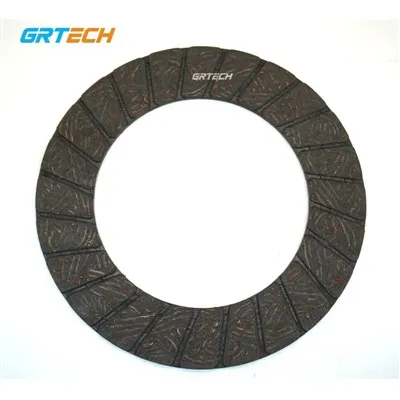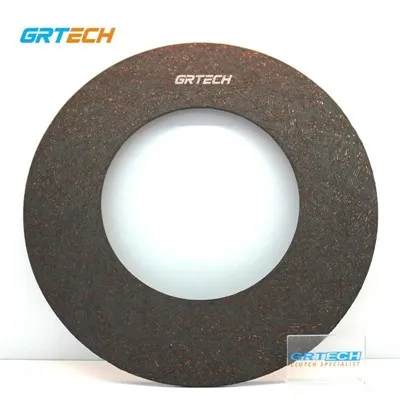
Advantages and Disadvantages of Paper-based Clutch Facings
Advantages
Excellent Shift SmoothnessThe difference between the dynamic friction coefficient and static friction coefficient of paper-based materials is extremely small. The power engagement process is gentle, with almost no jolting during starting and shifting, providing far superior driving comfort compared with semi-metallic products.
Superior Heat Dissipation PerformanceThe porous structure of the material enables rapid dissipation of heat generated during clutch engagement. The friction performance exhibits minimal degradation under high-temperature conditions, effectively preventing thermal fade issues.
Lightweight CharacteristicWith a density much lower than that of metal-based materials, paper-based facings reduce the rotational inertia of the clutch assembly, enhance transmission efficiency, and lower the overall vehicle energy consumption simultaneously.
Low Noise OperationThe relatively soft material minimizes impact noise when in contact with the flywheel and pressure plate, ensuring quieter operation.

Disadvantages
Extremely Poor Oil Contamination ResistanceThe porous structure is highly prone to absorbing grease and oil contaminants. Once the surface is contaminated, the friction coefficient drops sharply, leading to slipping failures. This imposes stringent requirements on the cleanliness of assembly and maintenance processes.
Weak Torque-bearing CapacityThe limited mechanical strength of the material makes it unable to withstand high-load working conditions of high-horsepower engines or heavy-duty vehicles, rendering it unsuitable for heavy trucks and performance cars.
Moderate Wear ResistanceCompared with semi-metallic and powder metallurgy counterparts, paper-based facings have a shorter service life. Frequent starting and heavy-load driving will accelerate wear, necessitating more frequent replacement.
Restricted Application ScenariosIt is mainly suitable for wet clutches (the oil bath environment can compensate for some wear resistance shortcomings), and has a narrow application scope in dry clutch systems.