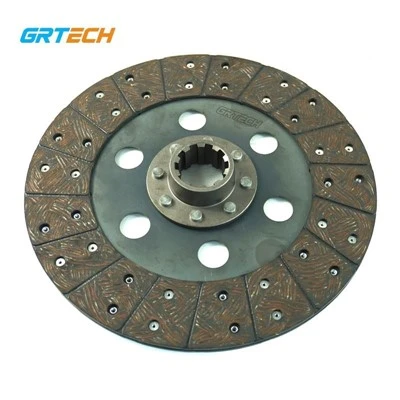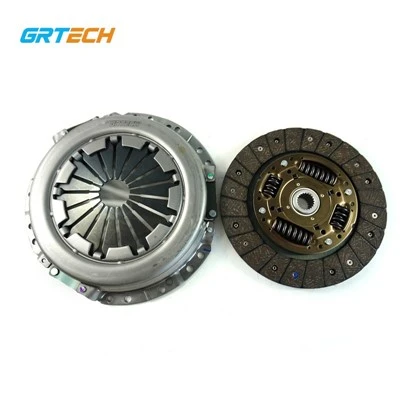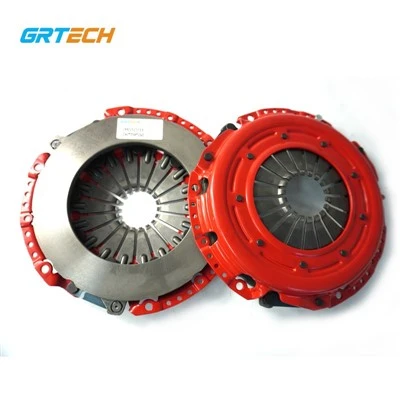
Advantages and Disadvantages of Semi-metallic Clutch Facing
Advantages
High cost-performance ratioWith low raw material costs, it serves as the mainstream choice for original equipment matching and after-sales maintenance of mass-produced family cars, featuring a budget-friendly price.
Stable friction performanceThe reinforcement of metal fiber skeleton ensures minimal fluctuation of friction coefficient under normal working conditions, effectively preventing slippage. It is suitable for mild scenarios such as urban commuting and short-distance travel.
Moderate wear resistanceIt can meet the service life requirements of ordinary family cars, eliminating the need for frequent replacement.
Mature manufacturing processThe production technology is widely popularized with a stable supply chain, making it easy to procure suitable models.
Disadvantages
Average ride smoothnessThe high hardness of metal components leads to more obvious jolts during starting or gear shifting compared with composite fiber clutch facings, which exerts a certain impact on driving comfort.
Relatively heavy weightMetal fibers increase the overall weight of the clutch facing, slightly raising the rotational inertia of the clutch assembly and thus having a minor negative effect on transmission efficiency.
Limited heat resistanceUnder working conditions like long-time high-speed driving, climbing or full-load operation, its friction performance tends to degrade due to high temperature. It is not suitable for high-performance vehicles or heavy-duty vehicles.

Advantages and Disadvantages of Composite Fiber Clutch Facing
Advantages
Excellent gear-shifting smoothnessTaking non-metallic materials such as glass fiber, carbon fiber and aramid fiber as the core, it features finer texture, resulting in extremely low jolt during starting and gear shifting and delivering a smoother driving experience.
Outstanding heat and wear resistanceIt maintains a stable friction coefficient in high-temperature environments and can withstand high-load working conditions. It is applicable to mid-to-high-end passenger cars, performance vehicles as well as light commercial vehicles frequently engaged in climbing or full-load transportation.
Lightweight designThe non-metallic fiber material is light in weight, which can reduce the rotational inertia of the clutch, improve transmission efficiency, and meanwhile cut down the fuel consumption (or power consumption) of the whole vehicle.
Good environmental friendlinessFree of metal dust, the debris generated after wear causes less harm to the environment and human health.
Disadvantages
Relatively high costThe raw materials of high-performance fibers are expensive, so the finished products are usually priced 30%-50% higher than semi-metallic ones. It is more suitable for mid-to-high-end vehicle models with high performance requirements.
Sensitivity to oil contaminationThe porous structure of fibers is prone to oil absorption. Once contaminated by oil, the friction performance will drop sharply, so strict cleaning is required during assembly and maintenance.
High supply chain thresholdThe production process is relatively complex, and the supply channels for some high-end models are limited, leading to slightly higher procurement difficulty.