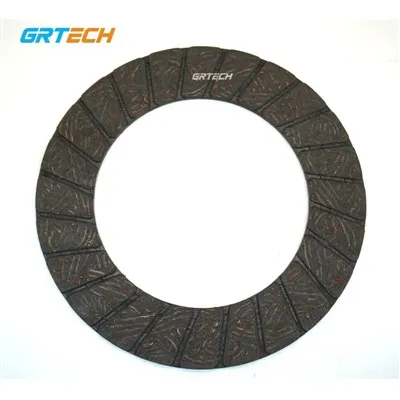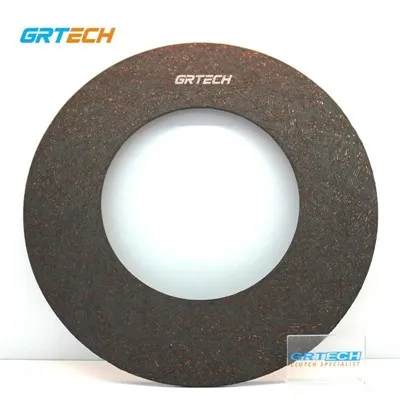
Selection and Characteristics of Clutch Friction Plates
Clutch friction plates are crucial components in the clutches of transmission systems for automobiles, tractors, and other machinery. They must possess a high and stable friction coefficient as well as excellent wear resistance. A great deal of research has been conducted on the friction characteristics of clutch plates both domestically and internationally. However, there is no conclusive consensus yet on the primary and secondary relationships among the influencing factors such as pressure (P), velocity (V), temperature (T), and rotational speed (t), their mutual interactions, the functional relationships between these factors and friction characteristics, and the accuracy of relevant tests.
Friction materials are the key factors determining the performance of clutch assemblies and brakes in vehicles and machinery. During the transmission and braking processes, they should primarily meet the following technical requirements: first, they should have an appropriate and stable friction coefficient; second, they should exhibit good wear resistance, along with excellent mechanical strength and physical properties; finally, they must ensure high engagement smoothness and comfort.