What is the evolutionary history of friction materials?
In the process of continuous exploration and development, friction materials have undergone continuous evolution from asbestos-semi-metallic materials to low-carbon steel, and the market's requirements for the performance of brake pad materials are also increasing. New organic bushings, carbon fiber reinforced composite bushings It is also gradually put into the market. So what materials have been used as brake pad materials since ancient times? Let's find out together.

Asbestos Asbestos is the earliest material used in friction materials, because it has excellent heat resistance and friction properties, and is affordable, but there are health risks, so asbestos materials are no longer used in the development of friction materials.
Aramid The heat resistance of aramid is better than that of the organic lining mentioned above, and the friction properties of the nylon material obtained by bonding the short fibers together are also good. Although aramid has high strength, it is very sensitive to the environment, and a small amount of grease can reduce the life of the aramid bushing.
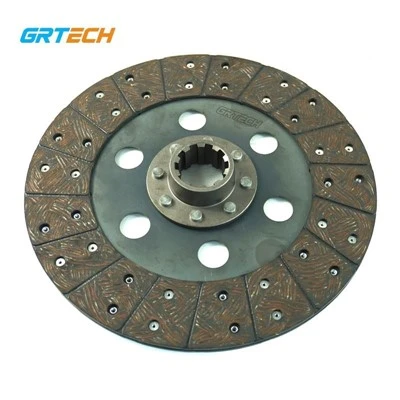
Sintered iron A powdered metal material is poured into an abrasive tool and melted under high temperature and pressure. Many metals can be sintered for clutch linings, but iron is the most common. The biggest advantage of sintered iron disc is that it has both anti-slip ability and excellent friction coefficient, and it has good friction performance even at high temperature, making it a very ideal friction material. The friction coefficient of sintered iron is higher than that of the above-mentioned materials, but there are also some disadvantages, such as the weight of iron is heavier, and the anti-wear performance is not good.
Carbon material Carbon material is a new type of material developed in recent years, which is the latest technology for clutch bushings. The carbon bushing is light in weight, high in strength and excellent in heat resistance - it can withstand high temperatures of 800~1000 ° C, and the friction performance of carbon materials can be enhanced by adding friction modifiers, so it has good application prospects. Using carbon fiber reinforced composite materials to make brake pads is very expensive, which limits its scope of application to a large extent. At present, carbon fiber is mainly used as a friction material in F1 racing cars.
With the long-term exploration and research of scientific researchers, friction materials have been continuously developed and updated. Organic materials, inorganic materials, metal materials, etc. have been applied in the market as brake pad materials, but from the current market alone, each material Each has its corresponding advantages and disadvantages.