Working Principle of Truck Clutch
A truck clutch operates based on the principle of friction transmission and has three main operating states:
| Status | Operation | Working Process |
|---|---|---|
| Engaged | Release clutch pedal | The diaphragm spring (or coil spring) firmly presses the pressure plate and clutch disc against the flywheel, transmitting engine torque via friction. |
| Disengaged | Depress clutch pedal | The release bearing pushes the diaphragm spring (or release levers), separating the pressure plate from the clutch disc and interrupting power transmission. |
| Half-engaged | Slowly lift the pedal | Partial contact between the pressure plate and clutch disc transmits partial torque, enabling smooth start and low-speed control. |
Core Components
A truck clutch generally consists of four major systems:
1. Driving Member
Flywheel: Rigidly connected to the engine crankshaft, providing power input and friction surface.
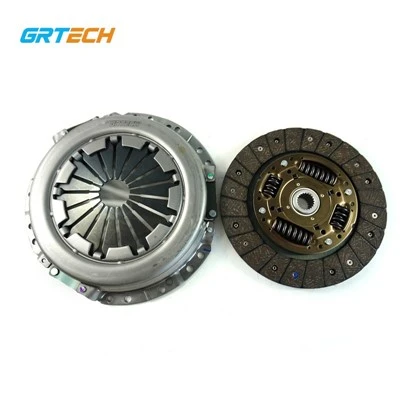
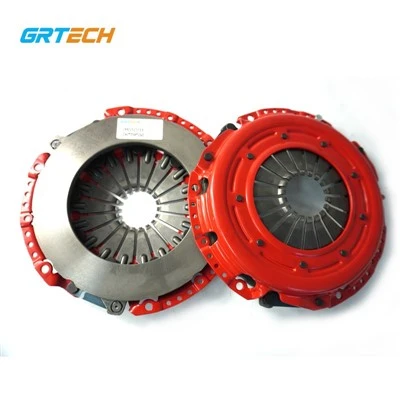
Pressure plate: Bolted to the flywheel, pressing the clutch disc under spring force.
Clutch cover: Protects internal components and provides a mounting base.
2. Driven Member
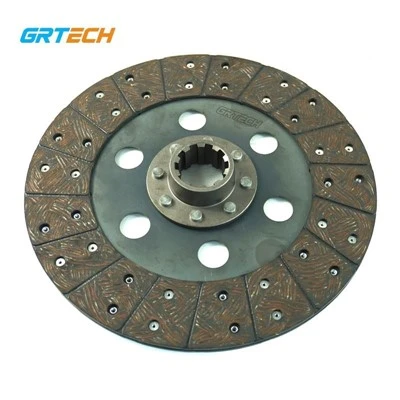
Clutch disc (friction plate assembly): Includes friction linings, steel plate, and splined hub. The splined hub engages with the transmission input shaft to transmit power.
Friction linings: Made of high-friction-coefficient materials (e.g., ceramic, organic composite materials), resistant to heavy loads and high temperatures.
3. Pressuring Mechanism
Diaphragm spring: Mainstream configuration in modern trucks, serving both as a pressing spring and release lever. It features light operation and stable clamping force (approximately 1.8–2.3 tons).
Coil spring: Traditional design, divided into circumferential springs and central springs. Simple structure but requires heavier operation.
4. Operating Mechanism
Clutch pedal: Driver control interface.
Release bearing: Connects the release fork and diaphragm spring to reduce friction.
Release fork: Lever mechanism that transmits pedal force to the release bearing.
Hydraulic/mechanical transmission system: Transmits pedal force (heavy trucks mostly use hydraulic systems for light and effortless operation).
Clutch brake: Exclusive to some heavy-duty trucks, used to completely stop the transmission input shaft for smooth engagement of low gears.