Main Types and Characteristics of Truck Clutches
According to their structure and application scenarios, truck clutches are mainly classified into the following types:
1. Classification by Number of Friction Plates
| Type | Characteristics | Application Scenarios |
|---|---|---|
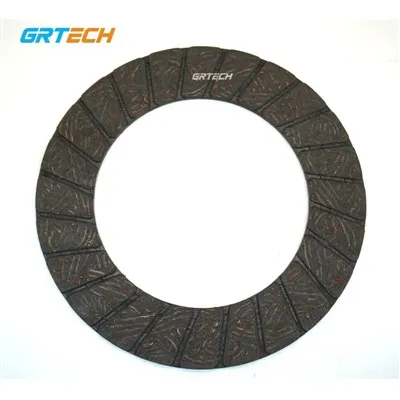
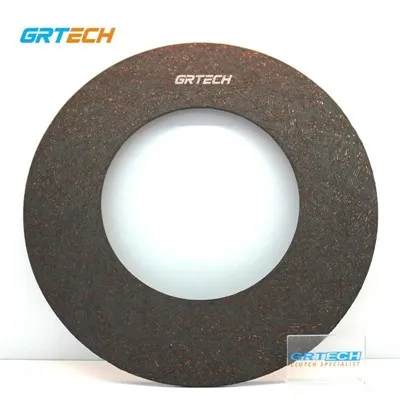
| Single-plate dry clutch | Simple structure, good heat dissipation, complete disengagement, low moment of inertia of the driven part | Medium-duty trucks, light trucks, vehicles with moderate torque requirements |
| Double-plate dry clutch | Double friction surfaces, high torque transmission (up to 1.8 times that of a single plate), but poor heat dissipation | Heavy-duty trucks, engineering vehicles, scenarios requiring high torque transmission |
| Multi-plate wet clutch | Multiple sets of friction plates immersed in oil, good heat dissipation, low wear, smooth engagement, capable of withstanding extremely high torque | Special vehicles, heavy engineering machinery, trucks with automatic transmissions |
2. Classification by Type of Pressure Springs
| Type | Characteristics | Advantages and Disadvantages |
|---|---|---|
| Diaphragm spring clutch | Compact structure, light operation, stable clamping force, automatic wear clearance adjustment | Relatively high cost, high requirements for manufacturing precision |
| Coil spring clutch | Simple structure, low cost, convenient maintenance | Heavy operation, large variation in clamping force with wear |
3. Special Types
Automatic adjusting clutch: Equipped with a built-in automatic adjustment mechanism to compensate for friction plate wear and maintain stable pedal travel.
Centrifugal clutch: Automatically engages by centrifugal force, suitable for special vehicles under specific working conditions.
Dual-clutch system: Used in Automated Mechanical Transmissions (AMT) to achieve fast, power-interruption-free gear shifting.