What is the principle of clutch braking?
When it comes to the clutch, everyone will feel familiar, but when it comes to the clutch brake, many people don't know what it is. The editor will introduce the clutch brake to you, let's take a look!
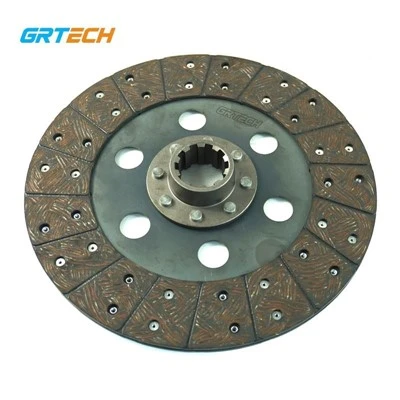
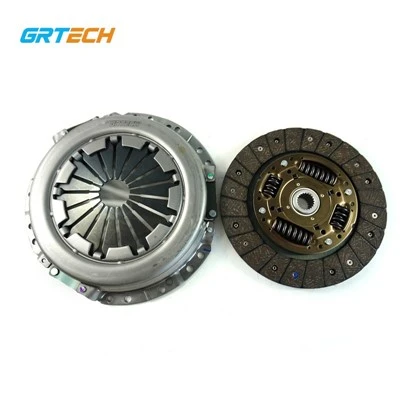
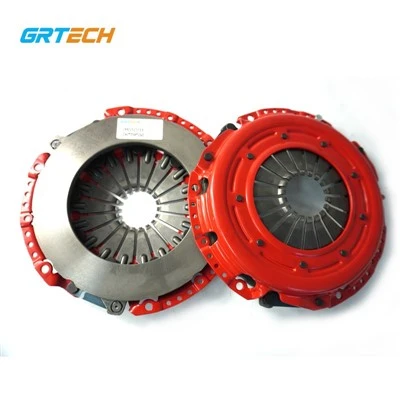
The so-called clutch, as the name suggests, uses "off" and "on" to transmit the appropriate amount of power. The clutch consists of friction plates, spring plates, pressure plates and power output shafts. It is located between the engine and the gearbox. It is used to transfer the torque stored on the engine flywheel to the gearbox to ensure that the vehicle is transferred to the gearbox under different driving conditions. The appropriate amount of driving force and torque for the driving wheels belongs to the category of powertrain.
In the semi-linked state, the power input end and the power output end of the clutch are allowed to have a speed difference, that is, the appropriate amount of power can be transmitted through the speed difference.
The clutch is divided into three working states, namely non-linkage when the clutch is depressed, full linkage when the clutch is not depressed, and semi-linkage when the clutch is partially depressed. When the vehicle starts, the driver depresses the clutch, and the movement of the clutch pedal pulls the pressure plate backward, that is, the pressure plate and the friction plate are separated. At this time, the pressure plate and the flywheel are not in contact at all, and there is no relative friction.
When the vehicle is running normally, the pressure plate is tightly pressed against the friction plate of the flywheel. At this time, the friction between the pressure plate and the friction plate is the largest. There is relative static friction between the input shaft and the output shaft, and the rotation speed of the two is the same. . The last one is the semi-linked state of the clutch, where the friction between the pressure plate and the friction plate is less than the fully linked state.
At this time, there is a sliding friction state between the clutch pressure plate and the friction plate on the flywheel. The speed of the flywheel is greater than the speed of the output shaft, and part of the power transmitted from the flywheel is transmitted to the gearbox. In this state, the relationship between the engine and the driving wheels is equivalent to a soft connection state.