The structure and characteristics of commonly used clutches in automobiles
The active part of the clutch and the slave part of the friction between the contact surfaces, so that the two can be temporarily separated, but also can be gradually engaged, and in the transmission process allows the two parts to rotate each other.
Fluid coupling working fluid (oil) transfer torque, shell and pump wheel as a whole, is the active part; turbine and pump wheel relative, is the slave part. When the pump wheel speed is low, the turbine can not be driven, the active and slave parts are separated from the state; with the increase in pump wheel speed, the turbine is driven, the active and slave parts are in the engagement state.
The electromagnetic clutch coil is energised to control the clutch engagement and disengagement. Magnetic powder placed between the active and driven parts can strengthen the engagement force between the two, such clutches are called magnetic powder electromagnetic clutches.
Clutch Slave Part
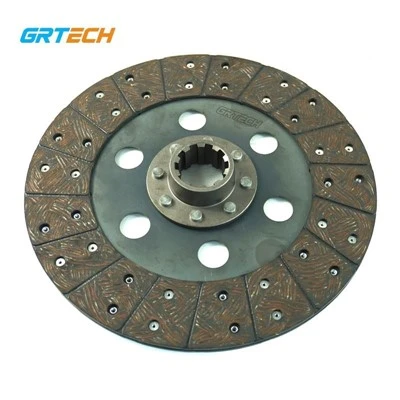
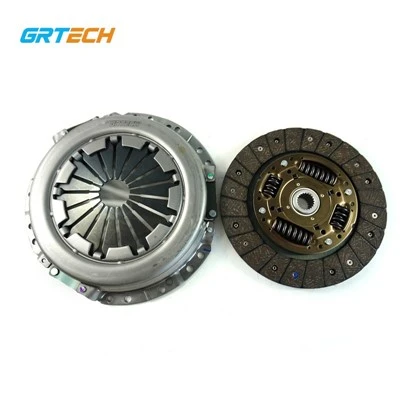
The driven part consists of a single, double or multiple disc, which transmits the power transmitted by friction from the driving part to the input shaft of the transmission. The disc consists of three basic parts: the disc body, the friction disc and the disc hub. In order to avoid resonance in the direction of rotation and to moderate the shock loads on the drive train, most cars have a torsion damper attached to the clutch disc.
In order to enable the car to start smoothly, the clutch should be able to engage gently, which requires a certain degree of elasticity in the axial direction of the disc. For this reason, often in the peripheral part of the disc body, along the radial and circumferential groove. And then the split shape.
Formed into a fan-shaped portion of the circumferential warping into a wave shape, the two sides of the two friction discs were riveted with their corresponding raised portion, so that the slave disc is compressed, the compression force with the warping of the fan-shaped portion of the flattening and the gradual increase, so as to achieve the effect of a soft engagement.
Torsion Damper
When the clutch is engaged, the torque from the engine is transmitted to the friction discs on both sides of the disc via the flywheel and pressure plate, which drives the follower disc body and the damper disc riveted to the follower disc body to rotate. The disc body and the damper disc in turn transmit the torque to the follower disc hub via six damper springs. Because of the elastic links, rotational shocks to the driveline can be mitigated here. Torsional vibrations in the driveline cause the driven disc hub to rotate back and forth relative to the disc body and damper disc, and the damping plate sandwiched between them consumes the energy of the torsional vibrations and attenuates them.