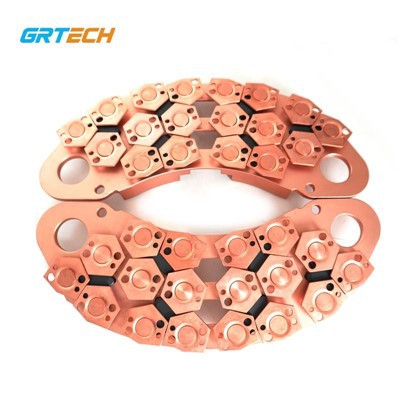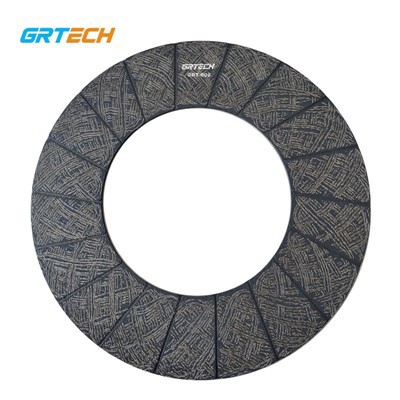
Performance Characteristics, Advantages and Disadvantages of Copper - Based Brake Pads
Core Advantages
High - temperature stability: It can still maintain a friction coefficient of 0.34 - 0.41 at 300 - 500℃, which is significantly better than iron - based materials (prone to adhesion) and organic materials (prone to high - temperature softening).
High wear resistance: Through dispersion strengthening (such as Cr₃C₂ particles) and fine - grain strengthening, the wear rate can be controlled below 2.9 mg/(N・m), making it suitable for frequent braking scenarios.
High thermal conductivity: The copper matrix can quickly conduct heat to the brake disc, avoiding cracks and performance degradation caused by local overheating.
Main Limitations
Environmental protection restrictions: Starting from 2025, regions such as Europe and the United States require the copper content in brake pads to be less than 0.5wt%, promoting copper - free alternative solutions (such as ceramic - based ones).
Relatively high cost: Fluctuations in copper prices and complex processes (such as vacuum hot - pressing sintering) result in its price being 30% - 50% higher than that of semi - metallic brake pads.
Impact of wear debris: Metal debris may pollute the environment and is prone to rusting the braking system in humid environments.