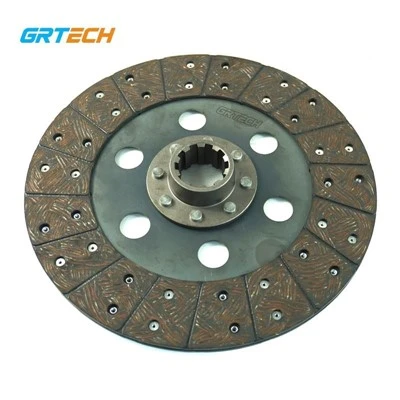
Non-asbestos organic material brake leather material (NAO)
Non-asbestos organic type brake materials mainly use glass fiber, aromatic poly cool fiber or other fibers (carbon, ceramics, etc.) as a reinforcing material, and its performance mainly depends on the type of fiber and other additive mixtures.
Non-asbestos organic brake materials were developed primarily as alternatives to asbestos for brake drums or brake shoes, but they are also beginning to be used as a replacement for front disc brake pads. In terms of performance, NAO brake pads are closer to asbestos brake pads than semi-metallic brake pads. It does not have good thermal conductivity and good high temperature controllability like semi-metallic brake pads.
What is the difference between the new NAO raw materials and asbestos brake pads? Typical asbestos-based friction materials contain five to seven base blends, including asbestos-reinforced fibers, a variety of additives, and binders, such as linseed. Oil, resin, benzoquinone, resin. In comparison, NAO friction materials contain approximately seventeen different stick materials, because removing asbestos does not equate to simply replacing a substitute, but requires a large batch of mixture to ensure braking performance, making it flat or Exceeds the braking effect of asbestos friction blocks.
The material of NAO brake pads has undergone several changes. Now NAO materials have effectively surpassed the performance of asbestos brake pads in many aspects, mainly in terms of anti-friction performance and noise.
Of course, the specification standard should first be determined, because only then can any new friction material formulation be tested. These specifications should include friction properties, fatigue resistance, temperature suitability, wear resistance, and noise. The better the friction material, the better the frictional properties of the friction block at different temperatures and pressures. In other words, the performance should be little changed at low or high temperatures. The better the friction material, the less likely the brake shrinkage will occur after repeated braking, which keeps the "brake pedal feel" good. Better materials also reduce wear and reduce noise. The earlier NAO brake pads only met some of the requirements, but now they are almost completely achieved. Today's NAO brake pads have a significantly longer life than asbestos brake pads, while also extending the life of the brake drum and brake disc.