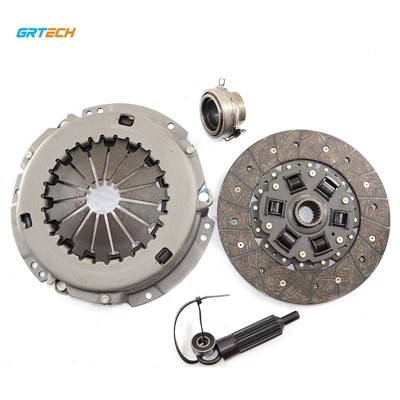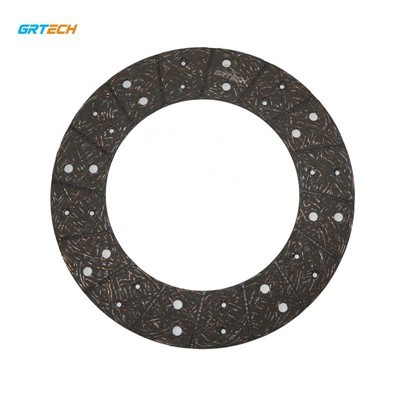
High Quality Iron Sintered Clutch Disc for Racing
一,Core Quality Standards (Racing-Grade)
1. Material & Manufacturing Quality
| Parameter | Racing-Grade Requirement | Purpose |
|---|---|---|
| Base Material | High-purity iron (Fe ≥ 85%) + alloy elements (Cu, Mo, Ni, C) | Ensure high thermal stability and wear resistance |
| Sintering Process | Vacuum/high-pressure sintering at 1100-1300°C | Eliminate porosity, improve density (≥6.5 g/cm³) |
| Friction Compound | 5135 (high friction) or 5191 (balanced) specialized racing formulas | Consistent torque transfer & high heat capacity |
| Hub Design | Solid hub (rigid) for racing, optional sprung hub for rally | Quick engagement, reduced rotational inertia |
| Splines | Hardened alloy steel, precision-ground (tolerance ±0.02mm) | Durability under high torque, minimal backlash |
2. Performance Quality Metrics
Friction Performance (Critical for Racing)
Static Friction Coefficient (μs): ≥0.35 (SAE J2489)
Dynamic Friction Coefficient (μd): ≥0.30, stable at 300°C (≤±15% fluctuation)
Thermal Decay Rate: ≤15% @350°C, recovery rate ≥85%
Wear Resistance: Linear wear rate ≤0.2mg/cycle, volume loss ≤50mm³/100km
Mechanical & Thermal Performance
Torque Capacity: 3-5x higher than organic discs (varies by size/design)
Burst RPM: ≥12,000 (single disc), ≥10,000 (multi-disc)
Shear Strength: ≥8MPa (GB/T7124)
Max Operating Temperature: 800-1200°C (vs 450°C for organic)
Thermal Expansion Coefficient: ≤15×10⁻⁶/K
Quality Certifications
SFI 1.2/1.1: Mandatory for drag racing and high-performance motorsport
ISO 9001/TS 16949: Manufacturing quality assurance
Dynamic Balancing: ≤0.5g·cm (critical for high RPM stability)