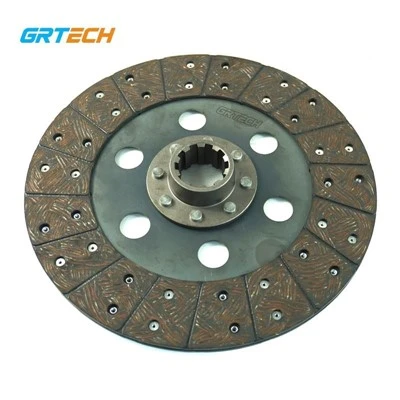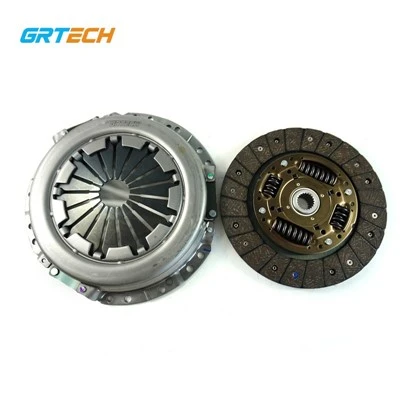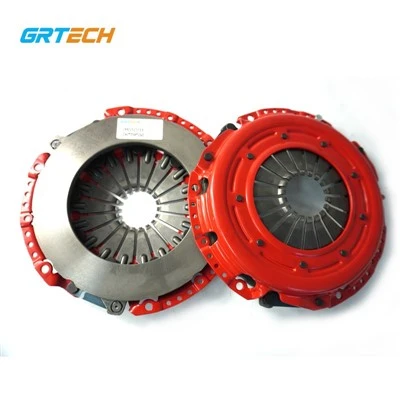
High-quality clutch steel plates
Here we systematically clarify the judgment criteria, common materials, reliable brands, and selection/identification methods for high-quality clutch steel plates, to help you accurately distinguish them during procurement or maintenance.

I. Core Performance and Technical Standards
Material and Heat Treatment
Common high-end materials: 65Mn, 60Si2Mn spring steel, or low-carbon alloy structural steel. Quenching + tempering is required to ensure uniform surface hardness (avoiding local brittle fracture) while retaining core toughness.
Anti-rust treatment: Wet-type steel plates are usually subject to surface phosphating/blackening for rust prevention; dry-type steel plates emphasize flatness precision.
Key Indicators
Minimal flatness and parallelism errors (usually ≤0.02mm), with thickness tolerance controlled within ±0.01~0.03mm.
Free of internal sand holes, cracks, and burrs; spline tooth profile is precise without jamming.
Heat Resistance and Heat Dissipation
Capable of withstanding high temperatures (300~400℃ for short periods) generated by frequent clutch engagement, with minimal thermal deformation.
Wet-type steel plates: Equipped with a reasonable oil groove/channel design to achieve rapid heat dissipation and lubrication.
Dry-type steel plates: Form good heat conduction with the pressure plate through a flat contact surface.
Fatigue Resistance and Wear Resistance
No warping or cracking under long-term alternating loads.
Low surface roughness (Ra value), which reduces abnormal wear on friction plates, improves clutch smoothness, and lowers jitter and noise.