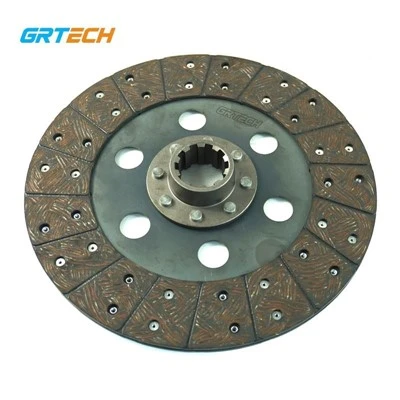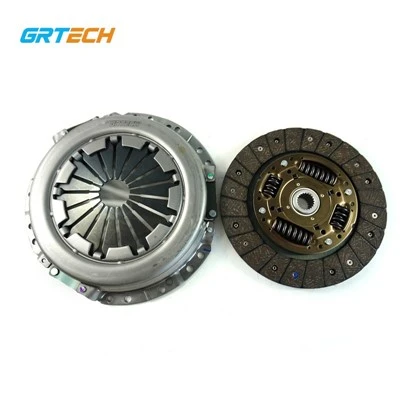
Composite Yarn - Asbestos-Free Yarn for Friction Plates
"Composite Yarn - Asbestos-Free Yarn for Friction Plates" refers to a type of environmentally friendly composite yarn specifically designed for manufacturing friction components such as clutch friction plates. It eliminates carcinogenic asbestos components and achieves compatibility with the core requirements of clutch friction plates (e.g., high-temperature resistance and stable friction performance) through the composite combination of multiple fibers. The following is a detailed explanation from three aspects: core characteristics, common formulations & manufacturing processes, and practical applications.
Core Characteristics
Environmental Safety: This is one of its core advantages. Asbestos fibers are widely banned worldwide due to their strong carcinogenicity. Such asbestos-free yarns completely avoid this risk from the source of raw materials. In addition, some formulations do not contain metal fibers, which can further reduce fly floss pollution during the production process, complying with environmental protection regulations and production environment requirements.
Strong Performance Compatibility: Through the composite combination of different fibers, a variety of performances suitable for clutch friction plates can be achieved. For example:
Combining with phenolic fibers can improve the impregnation performance and enhance compatibility with the rubber material of friction plates.
Adding aramid fibers can strengthen wear resistance and high-temperature resistance, solving the problem of thermal degradation of traditional materials, and meeting the strength and friction requirements of clutches during frequent engagement and disengagement.
Good Structural Stability: For instance, some yarns with glass fiber as the base, after being impregnated with silane coupling agent, form chemical bonds on the fiber surface. This enhances the bonding force with other fibers, preventing the composite yarn from falling apart easily. The friction plates made subsequently have a more stable structure, reducing the possibility of cracking and falling off during use.
Common Formulations and Manufacturing Processes
| Formulation Type | Core Raw Material Combination | Key Manufacturing Process Points |
|---|---|---|
| Glass Fiber-Based Expanded Composite Yarn | Glass fiber (5 parts), phenolic fiber (2-4 parts), aramid fiber (1 part) | 1. First, immerse glass fibers in a 1-5% silane coupling agent solution for 3-5 hours, then dry at 45-65°C;2. Feed the three types of fibers into an expansion nozzle, and use high-pressure air (0.5-1MPa) for expansion and twisting to form the yarn. |
| Core-Spun Composite Yarn | Core layer: glass fiber, etc.; Wrapping layer: acrylic fiber, viscose fiber, aramid fiber, etc. | Adopt air friction spinning process: wrap the surface fibers around the core layer, then perform doubling and twisting with other fibers to form the yarn. The finished yarn can be woven into base fabric or directly wound into packages. |
| Mineral Fiber-Based Composite Yarn | Mineral fibers (e.g., sepiolite, brucite) (70-100%), combined with cotton pulp or waste paper pulp (0-30%) | Manufactured via the sheet-forming spinning method, which includes pulp making, paper forming, cutting, yarn twisting, and ply twisting. This process is simple and low-cost. |
Practical Application Scenarios
Commercial Vehicle Clutch Friction Plates: This is its main application field. With the increase in the localization rate of raw materials such as aramid fibers, the cost of this type of yarn has decreased, promoting a significant rise in its penetration rate in the supporting market of commercial vehicles (e.g., heavy-duty trucks, light-duty trucks). For example, enterprises like Zhejiang Hangmin use relevant yarns to produce friction plates that are compatible with mainstream clutch manufacturers such as Fast, meeting the high-frequency clutch requirements of commercial vehicles during heavy-load and long-distance driving.
Construction Machinery and Special Machinery: It is suitable for clutch friction plates of equipment such as mining trucks and excavators. These devices operate in harsh environments, and their clutches need to withstand high-intensity friction and high temperatures. The friction plates made of this type of yarn have stable friction coefficients and low wear rates, ensuring continuous operation of the equipment and reducing downtime caused by failures.
Auxiliary Components of General Machinery: Some yarns made with special formulations can also be used in small clutches or braking components of textile machinery and small agricultural machinery. Relying on their lightweight feature and stable friction performance, they are compatible with the relatively mild but frequent start-stop working conditions of such equipment.