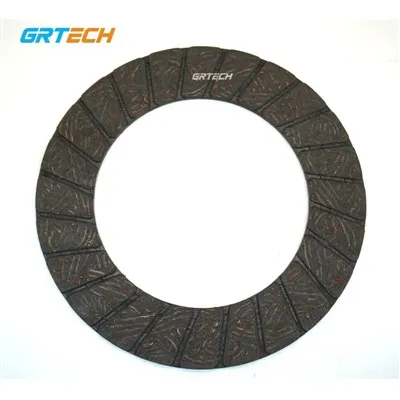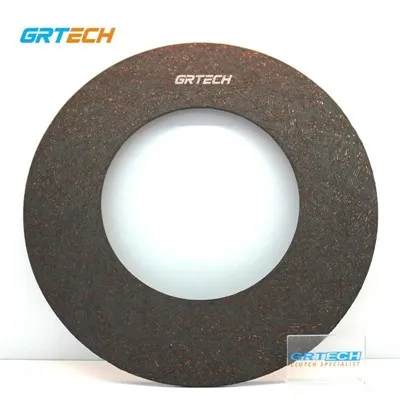
brake band
Definition: A brake band is a flexible band-shaped component, usually consisting of a steel strip base and friction material (brake lining) bonded to it, wrapped around a brake drum or other cylindrical rotating part.
| Characteristics | Description |
|---|---|
| Structure | Composed of a steel strip and friction material; one end is fixed, and the other is connected to an actuator (e.g., hydraulic cylinder, lever). |
| Working Principle | By tightening the band, its friction material comes into close contact with the outer surface of the brake drum, generating friction to prevent rotation. |
| Main Applications | Internal braking in automatic transmissions, small machinery, handheld equipment such as chainsaws, parking brakes in some older vehicles. |
| Features | Simple and compact structure, high braking torque, low cost; however, average heat dissipation and relatively low braking precision. |

II. Brake Drum
Definition: A brake drum is the rotating element in a drum brake system. It is hollow and bell-shaped, fixed to the wheel hub and rotating with the wheel. Its inner cylindrical surface (for conventional drum brakes) or outer surface (for band brakes) serves as the friction working surface.
| Characteristics | Description |
|---|---|
| Structure | Usually integrally cast from high-strength gray cast iron or alloy; some designs combine light alloy and cast iron. |
| Working Principle | Acts as a friction carrier. When the brake band tightens or brake shoes expand, kinetic energy is converted into thermal energy through friction to achieve deceleration or stopping. |
| Main Applications | Rear wheels of automobiles (especially trucks and vans), motorcycles, engineering machinery, etc. |
| Features | Large contact area, strong braking force, low cost, suitable for heavy loads; but poor heat dissipation, prone to brake fade, and slow braking response. |
III. Relationship and Differences Between the Two
| Comparison Items | brake band | brake drum |
|---|---|---|
| Motion State | Stationary (or only moves for tightening/loosening) | Rotates with the wheel |
| Friction Position | Acts on the outer surface of the brake drum in band brakes | Acts on the inner surface in conventional drum brakes |
| Functional Role | Active friction element (generates clamping force) | Passive friction element (provides friction surface) |
| Material Properties | Steel strip + friction material (prone to wear, requires regular replacement) | High-strength cast iron (wear-resistant, long service life) |
| Typical Assembly | Band brake system (mostly used in specific machinery and transmissions) | Drum brake system (mostly used in automobile rear wheels) |
IV. Working Scene Comparison
Band brake system: The brake band wraps around the outer surface of the brake drum. A lever or hydraulic mechanism pulls one end of the band to tighten it, generating braking force as if "clamping" the rotating brake drum.
Conventional drum brake system: Uses brake shoes (not brake bands). When the brake pedal is depressed, the brake shoes expand outward and press against the inner surface of the brake drum to produce frictional braking.
Summary
A brake band and a brake drum are two distinct but related braking components. The former is a flexible friction band, while the latter is a rigid rotating drum. They work together in different types of braking systems to achieve deceleration or stopping through the principle of friction.