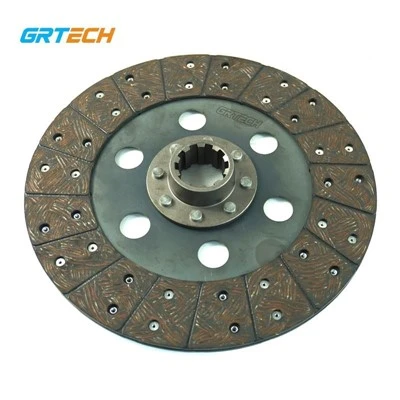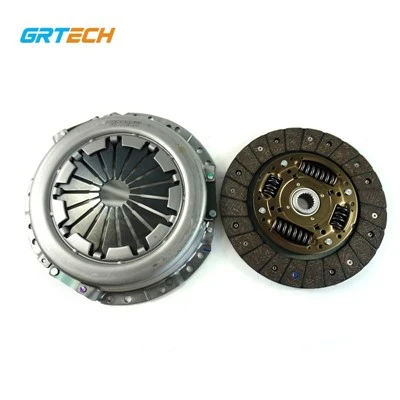
Automotive Clutch Facings
Definition and Function: Also known as friction plates or clutch discs, clutch facings are core components of the clutch in an automobile's transmission system. They are primarily responsible for transmitting or interrupting power between the engine and the transmission, enabling smooth starting, stopping, and gear shifting of the vehicle.
Materials
Asbestos-Free Organic Material (AOM)
A synthetic fiber material typically containing aramid fibers, polyester fibers, or other high-performance fibers. It offers a high friction coefficient, excellent heat resistance, and chemical resistance, while being environmentally and human health-friendly.
Metal-Reinforced Organic Material (MOM)
Metal powders or particles are added to organic materials to enhance the material's strength and wear resistance. This allows it to operate at higher temperatures with better thermal stability and shear resistance.
Other Materials
Some new-type clutch facings also use ceramic materials or special coatings to further improve their wear resistance and thermal stability.
Structure
Usually composed of two parts: the base material provides structural support, while the friction material is responsible for transmitting torque and bearing friction.
Performance Requirements
Good Frictional Performance: Capable of providing stable frictional force under different speeds and loads.
Wear Resistance: Able to withstand long-term use and frequent clutch operations without excessive wear.
Heat Resistance: Maintains physical and chemical stability at high temperatures.
Moisture and Chemical Resistance: Resistant to moisture and chemical substances encountered during vehicle operation.
Dimensional Stability and Shock Resistance: Maintains geometric shape and performance under vibration and impact.