Working Principle of Clutch Kit
The clutch kit engages and disengages power transmission through the following steps:
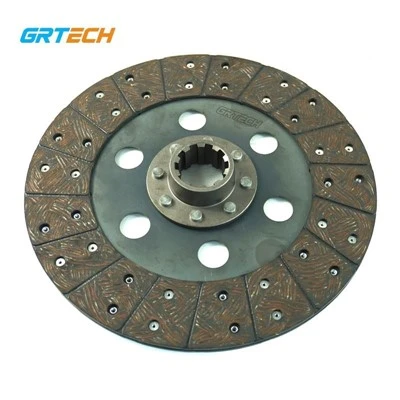
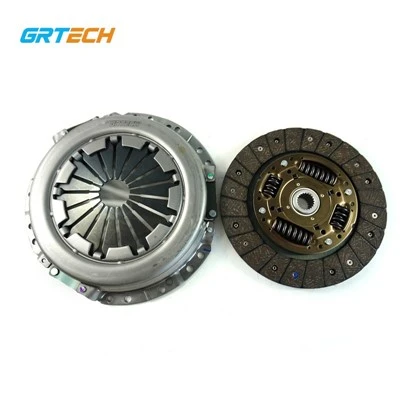
Engaged StateThe pressure plate firmly clamps the clutch disc against the engine flywheel via spring force. The three components rotate synchronously, transferring power from the engine to the gearbox.
Disengagement ProcessDepress the clutch pedal → Release bearing pushes the release levers → Pressure plate releases the clutch disc → Power transmission is interrupted, allowing smooth gear shifting.
Re-engagementRelease the clutch pedal → Release bearing resets → Pressure plate clamps the clutch disc again → Power transmission resumes, and the vehicle continues moving.
3. Main Types
Classified by application and performance level, clutch kits are divided into the following categories:
| Type | Application | Key Features | Friction Material |
|---|---|---|---|
| OEM Standard Type | Daily commuting, OEM replacement | Prioritizes smoothness, moderate pedal effort, long service life | Organic friction disc, standard clamping force |
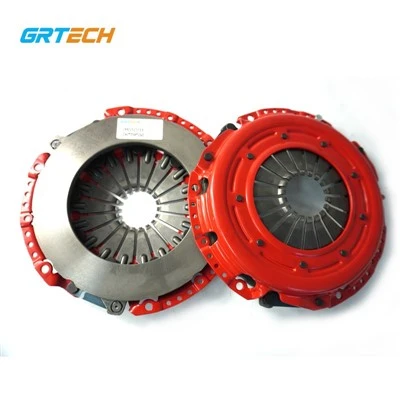
| Performance Upgraded Type | Light modification, high-torque engines | Improved torque capacity, anti-slipping | Reinforced organic or semi-metallic friction disc, higher clamping force |
| Competition Type | Racing, heavily modified vehicles | Extreme torque transfer, rapid response | Ceramic / carbon-ceramic composite friction material, extremely high clamping force, shorter service life |
| Heavy-Duty Type | Trucks, pickups, towing vehicles | Withstands heavy loads, high durability | Thickened friction disc, reinforced pressure plate structure, high-temperature resistance |