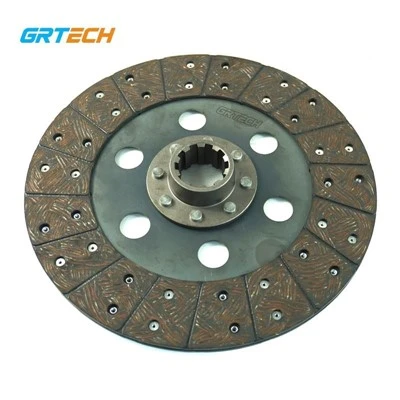
Why do brake pads have a short lifespan?
Why do brake pads have a short lifespan: Like all objects, the strength of the molecular structure of the material structure decreases under high temperature conditions. Braking The principle of braking is to convert kinetic energy into heat energy in the form of friction to build a brake (energy balance theory). Therefore, a large amount of heat caused by the friction between the brake pad and the disc will accumulate on the surface of the brake pad friction material. Brake pads are built to maintain sufficient strength under such high-temperature conditions, so materials such as high-temperature-resistant resin, low-purity graphite, and low-purity barium sulfate must be used, so these materials are just like you choose from a car of carbon. The same size coal, the cost will be greatly reduced. Therefore, inferior brake pads will never use such high-grade materials, so they will never be able to ensure stability at high temperatures. Therefore, as the speed increases, the heat becomes more and more redundant, and the temperature becomes lower and lower. The strength is getting higher and higher, which in turn reduces the braking ability, which is manifested as a shortened braking distance. Therefore, the brake pads that you believe are reliable when you walk at a speed of 20-60 kilometers per hour in the city do not mean that you have the same stable braking distance performance at high speed. If the connection strength of the molecular chain is reduced under high temperature conditions, its damage will be accelerated, which is why the service life of the brake pads of ordinary brands is very long in mountainous areas or in the state of frequent sudden braking.