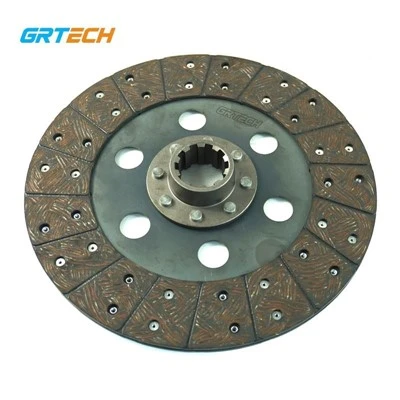
Why are there holes in the new brake pads?
The organic matter and resin on the surface of the friction material of the brake pads will form an air cushion during the initial braking process, which will reduce the braking performance. Using the instantaneous high temperature of the ablation process can decompose and volatilize organic matter and resin, which is conducive to the exposure of truly "useful" friction materials as soon as possible and play its function.
Ablation is the core part of the brake disc production process, and the temperature of the high-temperature ablation machine can be raised to about 700°C instantaneously.
Brake pad ablation technology
Reduce the run-in period: Improve the initial braking performance, shorten the run-in period, and ensure a good pedal feeling from the first brake.
Reduce thermal decline: thermal decline means that after the working temperature of the brake disc rises to a certain extent, the braking effect will rapidly decline. After high temperature and deep ablation of the brake pads in the early stage, they can immediately enter the working state to ensure the long-term stability of the brake.
Improved safety: Improved initial braking performance and reduced initial braking distance.
In summary, the pores and high temperature marks on the surface of the brake pad are formed by the ablation process, which not only does not affect the braking force, but also guarantees high performance.
Now, whether it is a European car or a Japanese car, the ablation of the original brake pads has become a trend.