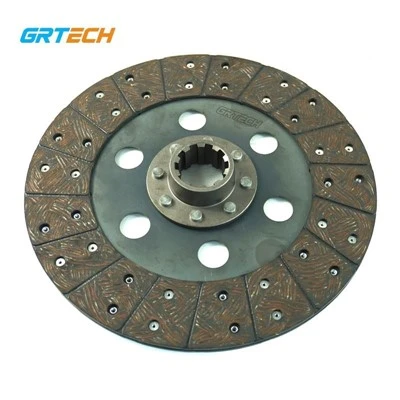
What material are ceramic brake pads made of? (superior)
Ceramic brake pads subvert the concept of ceramic brake pads in the traditional sense. Ceramic brake pads are composed of ceramic fibers, iron-free filler substances, adhesives and a small amount of metal.
Ceramic brake pads are a kind of brake pads. Many consumers mistakenly think that they are made of ceramics at first. In fact, ceramic brake pads start from the principle of metal ceramics instead of non-metallic ceramics. The high temperature generated on the surface can reach 800-900 degrees according to the measurement, and some are even higher. At this high temperature, a reaction similar to cermet sintering will occur on the surface of the brake pad, which makes the brake pad have good stability at this temperature. However, traditional brake pads will not produce sintering reaction at this temperature. Because the surface temperature rises sharply, the surface material will melt and even produce air cushions, which will cause the braking performance to decrease sharply or the brakes will be completely lost after continuous braking.
Features of ceramic brake pads:
Less dust on the wheels; long life of discs and couplers; no noise/vibration/damage to discs. The specific performance is:
(1) The biggest difference between ceramic brake pads and traditional brake pads is that there is no metal. Metal in traditional brake pads is the main material that generates friction, which has high braking force, but wears a lot and is prone to noise. After installing ceramic brake pads, there will be no abnormal clamor (that is, scratching sound) during normal driving. Because the ceramic brake pad does not contain metal components, it avoids the metal clamor of friction between the traditional metal brake pad and the counterpart (that is, the brake pad and the brake disc).
(2) Stable coefficient of friction. The coefficient of friction is the most important performance index of any friction material, which is related to the braking ability of the brake pad. During the braking process, due to the heat generated by friction and the increase of the working temperature, the friction material of the general brake pad is affected by the temperature, and the friction coefficient begins to decrease. In practical applications, the friction force will be reduced, thereby reducing the braking effect. The friction material of ordinary brake pads is immature, and the friction coefficient is too high, resulting in unsafe factors such as loss of direction control, burning pads, and scratching the brake disc during braking. Even when the temperature of the brake disc reaches 650 degrees, the friction coefficient of the ceramic brake pad is still around 0.45-0.55, which can ensure that the vehicle has good braking performance.
(3) Ceramics have good thermal stability, low thermal conductivity, and good wear resistance. The long-term use temperature is 1000 degrees. This feature makes ceramics suitable for the high-performance requirements of various high-performance braking materials, and can meet the technical requirements of high-speed brake pads, safety, and high wear resistance.
(4) It has good mechanical strength and physical properties. Can withstand greater pressure and shear force. Before assembly and use of friction material products, machining such as drilling and assembly is required to make a brake pad assembly. Therefore, it is required that the friction material must have sufficient mechanical strength to ensure that no damage or fragmentation occurs during processing or use.