The working principle of automobile clutch
The active part and the driven part of the clutch use the friction between the contact surface, or use the liquid as the transmission medium (hydraulic coupling), or use the magnetic drive (electromagnetic clutch) to transfer torque, so that the two can be temporarily separated, but also gradually engaged, and allow the two parts to rotate each other during the transmission process.
At present, the friction clutch with spring compression is widely used in automobiles (referred to as the friction clutch).
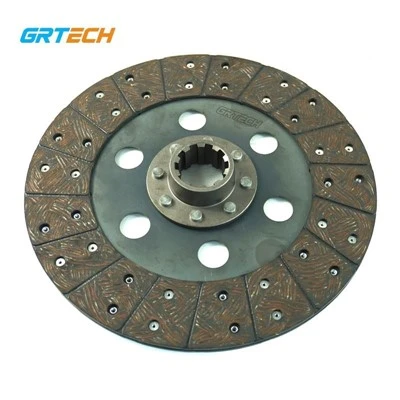
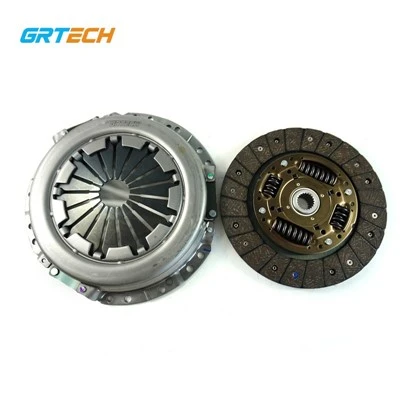
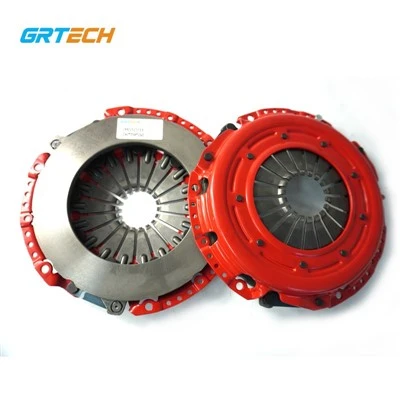
The torque emitted by the engine is transmitted to the driven disc through the friction between the flywheel and the contact surface of the press disc and the driven disc. When the driver presses down the clutch pedal, the big end of the diaphragm spring drives the pressure plate to move back through the transmission of the mechanical parts, and the driven part is separated from the active part.
The friction clutch should be able to meet the following basic requirements:
(1) Ensure that the maximum torque emitted by the engine can be transmitted, and there is a certain torque transfer force.
(2) When it can be separated, it can be completely separated, it can be soft when it is engaged, and it has good heat dissipation ability.
(3) The moment of inertia of the driven part is as small as possible. In this way, when the clutch is disengaged, the speed of the part connected to the transmission input shaft is easier to change, thereby reducing the impact between gears.
(4) It has the ability to mitigate the impact in the rotation direction, attenuate the vibration in the direction, and the noise is small.
(5) The pressure of the disc and the friction coefficient of the friction sheet change little, and the work is stable.
(6) Labor-saving operation, easy maintenance.