Structure and Principle of Automotive Brake Shoes
Basic Structure
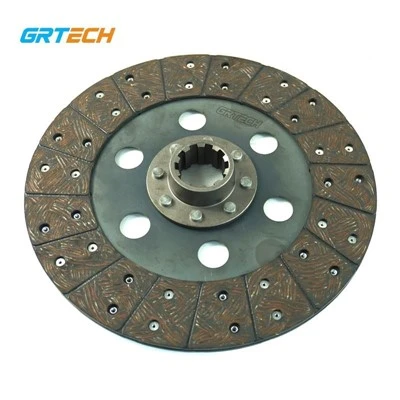
The main body of a brake shoe is a semicircular cast structure, consisting of two parts: the shoe base and the friction lining. The shoe base is generally made of materials such as HT250 gray cast iron and formed through precision casting. Its semicircular structure can fit the curved inner surface of the brake drum. The friction lining is fixed on the surface of the shoe base via riveting or bonding processes, and its material usually includes composites of reinforcing fibers and metal powder. In addition, the brake shoe assembly has a built-in return spring, and positioning pin holes for connection with the brake backing plate are provided at both ends of the shoe base. Some models are also equipped with automatic adjustment devices.
Working Principle
When the driver depresses the brake pedal, the hydraulic system pushes the wheel cylinder to expand outward. The piston pushes the brake shoes to both sides through a mechanical linkage mechanism, bringing the friction lining into contact with the inner wall of the brake drum that rotates at the wheel speed. The friction torque generated at the contact surface slows down the wheel, converting kinetic energy into heat energy for dissipation. After the braking is released, the return spring pulls the brake shoes back to their initial position, ensuring that a standard gap of 0.2-0.5 millimeters is maintained between the friction lining and the brake drum.