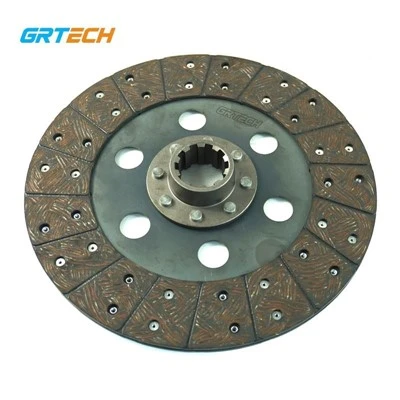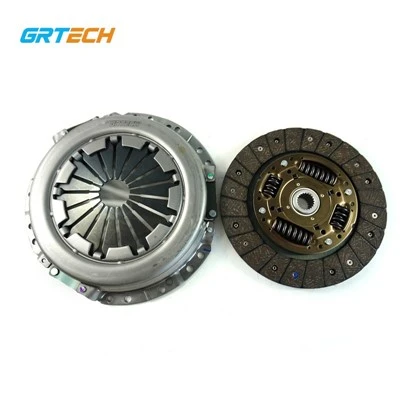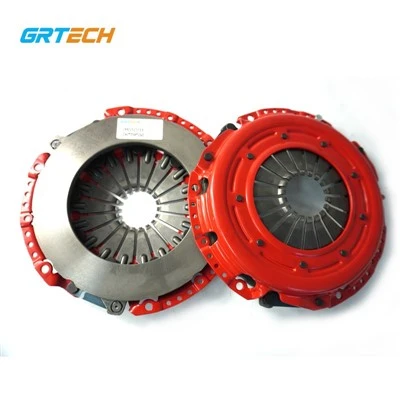
Structural components of friction materials
The fillers in the components of friction materials are mainly composed of friction property modifiers and cooperating agents. The purpose of using fillers is mainly in the following aspects:
(1) To adjust and improve the friction properties, physical properties and mechanical strength of the products.
(2) Control the coefficient of thermal expansion, thermal conductivity, shrinkage, and increase the stability of product size.
(3) Improve the braking noise of the products.
(4) Improve the manufacturing process performance and processing performance of the products.
(5) Improve the appearance quality and density of products.
(6) Reduce production costs.
In the formula design of friction materials, the choice of filler must understand the performance of the filler and its role in the various characteristics of the friction material. The correct use of fillers determines the performance of the friction material and is also very important in the manufacturing process.
According to the role of friction modifiers in friction materials, they can be classified into two categories: "wear-increasing fillers" and "wear-reducing fillers". The friction material itself belongs to the friction resistance material, in order to be able to perform the braking and transmission function requires a high coefficient of friction, so the friction increasing filler is the main component of the friction performance regulator. The friction increasing effect of different fillers is different.
The Mohs hardness of friction increasing filler is usually 3~9. The effect of friction increasing is obvious if the hardness is high. 5.5 hardness filler is hard filler, but it is necessary to control its dosage and particle size. (such as aluminium oxide, zircon, etc.)
Wear reducing filler: generally low hardness material, less than the Mohs hardness of 2 minerals. Such as: graphite, molybdenum disulfide, talc, mica, etc.. It can both reduce the coefficient of friction and reduce the wear of the counterpart material, thus improving the service life of the friction material.
Friction material is a special material working in the environment of heat and higher pressure, so it is required that the filler composition used must have good heat resistance, i.e. thermal stability, including thermophysical effects and thermochemical effects.
The packing density has a great influence on the performance of the friction material. Different performance requirements of the friction material, the filler packing density requirements are also different.