Professional Knowledge of Complete Truck Clutch Steel Disc Assemblies
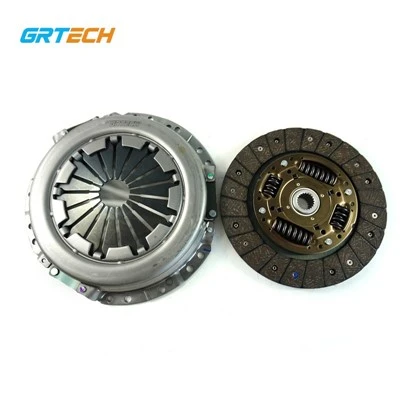
Truck dry clutches consist of three major categories of steel components: driven disc steel parts, pressure plate steel components, and diaphragm spring steel sheets. They are mainly manufactured from spring steel and high-quality carbon steel, serving as core elastic and load-bearing parts responsible for torque transmission, vibration damping, and friction lining compression.

I. Classification, Functions and Materials of Various Clutch Steel Sheets
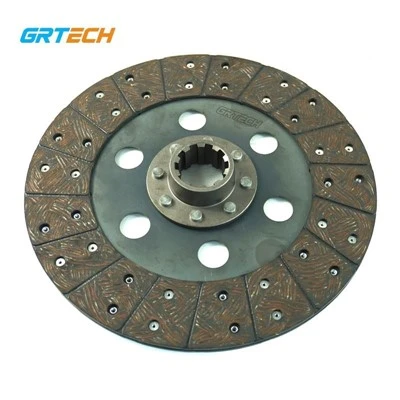
1. Driven Disc Main Plate (Base Steel Sheet)
Material: 65Mn spring steel plate, thickness 1.8–3.0 mm
Structure: Annular disc. Friction linings are fixed via rivet holes on the outer ring; vibration damping windows are cut on the inner ring for riveting with damping discs.
Functions: Clamps two friction linings and transmits engine torque to the shock absorber and transmission input shaft; bears alternating extrusion and torsional loads.
Failure Manifestations: Warpage, torn rivet holes, outer ring cracking, and excessive flatness deviation leading to clutch shudder.
2. Wave Cushion Steel Sheet (Corrugated Steel Sheet)
Material: Thin 65Mn spring steel, thickness 1.2–1.6 mm
Structure: Integrally stamped and bent into a wave shape; multiple sheets are stacked between friction linings and the main plate.
Core Functions:
Cushion starting and eliminate power impact
Enable smooth half-clutch engagement to reduce jerking and shudder
Compensate for wear clearance of friction linings and ensure uniform contact
Failure Mode: Collapsed wave shape and loss of elasticity, resulting in severe vehicle shudder during startup.
3. Damping Steel Sheet (Shock Absorber Cover Plate / Damper Steel Sheet)
Material: Grade 45 steel, 65Mn
Structure: Installed in pairs on both sides of the inner spline hub, matched with damping springs and damping plates.
Functions: Filter engine torsional vibration to prevent transmission resonance and abnormal noise; buffer shocks during idling and gear shifting.
Failure Manifestations: Cracked steel sheets or fallen-off springs, producing a clanging impact noise when idling or accelerating.
4. Drive Steel Sheet (Clutch Cover Connecting Steel Sheet)
Widely used in coil spring clutches to connect the clutch cover and pressure plate.
Material: 60Si2MnA
Function: Transmit clamping force from the cover and allow axial floating of the pressure plate to compensate for wear.
Damage Consequence: Uneven stress on the pressure plate after fracture, causing incomplete clutch disengagement and eccentric wear of friction linings.
5. Diaphragm Spring Steel Sheet (Key Compression Steel Component)
Core elastic part of mainstream single-plate clutches for 420/430 heavy-duty trucks.
Material: 60Si2MnA high silicon-manganese spring steel, quenched and tempered.
Structure: Integrally stamped with a disc-shaped base and slotted radial release fingers.
Function: Generates disc spring force to clamp the pressure plate; release force when the release fork presses the release fingers during disengagement.
Failure Manifestations: Worn release fingers, fatigue collapse or cracking of spring sheets, leading to clutch slip, incomplete disengagement and soft clutch pedal feel.
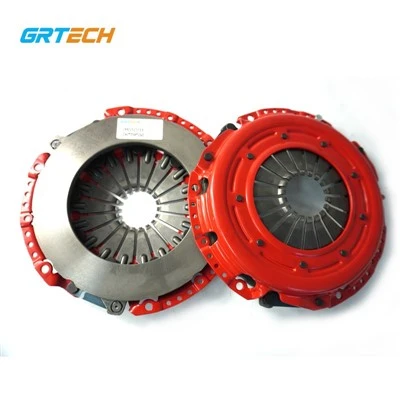
6. Pressure Plate Body (Cast Steel / Welded Steel Plate Pressure Plate)
Material: Cast steel, thickened stamped steel plate
Function: Clamps the driven disc friction linings together with the flywheel and bears all clamping loads.
Failure Manifestations: Eroded, warped or grooved working surface, resulting in clutch slip and smoking under high temperatures.
II. Material Heat Treatment and Process Standards (Universal for Heavy-Duty Truck Industry)
65Mn Steel Sheets (Main Plates, Wave Sheets)
Stamping forming → stress relief annealing → flattening → quenching + medium-temperature tempering Hardness: 42–48 HRC, ensuring elasticity and resistance to permanent deformation.
60Si2MnA Diaphragm Springs
Stamping, slotting and forming → high-temperature quenching → tempering → presetting under heavy load (stress elimination) Hardness: 48–54 HRC; fatigue service life ≥ 100,000 clutch engagement-disengagement cycles.
Surface Treatment
Phosphating and blackening for rust prevention and reduction of frictional abnormal noise.
Geometric Tolerance Requirements
Steel sheet flatness: ≤ 0.06 mm; excessive warpage directly triggers shudder
Rivet hole positional tolerance: ±0.1 mm
Wave steel sheet height tolerance: ±0.15 mm
III. Assembly Matching Logic (Combination Sequence of Steel Components)
Layer sequence from flywheel side to pressure plate side: Flywheel → Friction lining → Wave cushion steel sheet → Driven main plate → Damping steel sheet assembly → Pressure plate → Diaphragm spring
Two wave steel sheets must be arranged symmetrically; missing or insufficient installation is prohibited.
Damping steel sheets cannot be installed reversely; the damping contact surface must face the damping springs.
Release fingers of the diaphragm spring must have uniform height; height difference exceeding 0.3 mm causes unbalanced disengagement.
IV. Common Faults and Steel Sheet Damage Diagnosis
Vehicle shudder during startup Trigger factors: Collapsed wave steel sheets, warped driven main plates, deformed damping steel sheets
Clutch slip and insufficient power output Trigger factors: Reduced elastic force of fatigued diaphragm springs, warped pressure plate steel components
Difficult gear shifting and incomplete disengagement Trigger factors: Worn diaphragm release fingers, fractured drive steel sheets, jamming due to deformed main plates
Drivetrain abnormal noise (clanging sound during acceleration / throttle release) Trigger factors: Cracked damping steel sheets, dislodged damping springs
Abnormal eccentric wear of friction linings Trigger factors: Excessive flatness deviation of driven steel sheets, unilateral failure of wave steel sheets
V. Steel Sheet Parameters for Common Heavy-Duty Truck Clutch Sizes
380 Clutch (Light Trucks, Small Dumper Trucks)
Driven main plate thickness: 2.0 mm; wave sheet thickness: 1.2 mm; diaphragm spring thickness: 3.2 mm
420 Clutch (Mainstream Tractors, Muck Trucks)
Main plate thickness: 2.5 mm; wave sheet thickness: 1.4 mm; diaphragm thickness: 3.6 mm
430 High-Torque Clutch (High-Horsepower Tractors)
Main plate thickness: 3.0 mm; thickened wave sheet thickness: 1.5 mm; reinforced diaphragm thickness: 4.0 mm
VI. Professional Repair & Replacement Guidelines
Wave steel sheets must be inspected synchronously when replacing friction linings; replace immediately once elasticity is lost.
Slightly warped driven main plates cannot be repaired by flattening and must be replaced with new ones.
Any diaphragm spring with cracks or wear grooves on release fingers must not be reused.
Hammering or forced extrusion during steel sheet assembly is forbidden to avoid pre-induced plastic deformation.
Replace damping steel sheets and damping plates as a complete set during clutch overhaul; single-piece replacement is not allowed.
VII. Core Technical Design Points for Steel Sheets
Elastic Reserve: Wave steel sheets are designed with 1.5–3 mm compression stroke to provide full-lifespan cushioning performance.
Fatigue Resistance: Spring steel tempering eliminates internal stamping stress to prevent cracking during long-term operation.
Balance of Lightweighting and Strength: Thickened main plates match high-torque vehicles, while thin wave sheets improve driving smoothness.
Thermal Stability: Springback attenuation of steel sheets under high-temperature working conditions is controlled within 10% to avoid slip under heavy loads.
#GRTECH #clutchkit #clutchassembly #clutchplate #clutchdisc #releasebearing #pressureplate