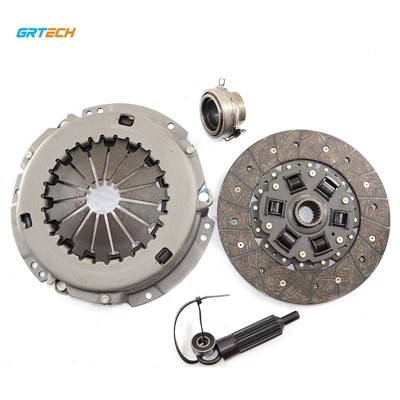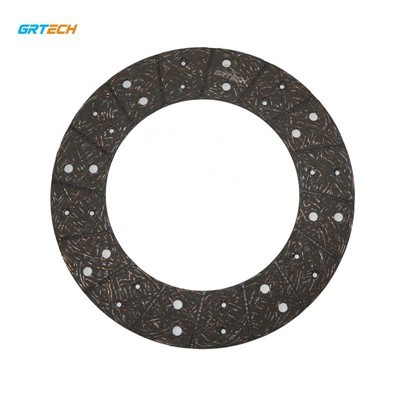
Main Types of Heavy-Duty Vehicle Clutches
1. Classification by Number of Driven Plates
Single-plate clutch: Simple structure, low cost and good heat dissipation. It is applicable to light-duty trucks and buses.
Double-plate clutch: Features large torque capacity (about 1.5 to 2 times that of a single-plate clutch), long service life and smooth starting performance. It is widely used in heavy-duty trucks.
Multi-plate clutch: Composed of multiple stacked friction plates with extremely high torque transmission capacity, commonly used in special vehicles and construction machinery.
2. Classification by Type of Pressure Spring
Diaphragm spring clutch: The diaphragm spring serves as both the pressure spring and release lever. It has a compact structure and light operation, making it the mainstream choice for modern heavy-duty vehicles.
Coil spring clutch: Adopts multiple coil springs for compression. It can transmit large torque but requires heavy operation force, and is gradually replaced by diaphragm spring clutches.
3. Classification by Release Mode
Push-type clutch: The release bearing pushes the pressure plate to disengage. It boasts high space utilization and is suitable for front-engine vehicles.
Pull-type clutch: The release bearing pulls the pressure plate to disengage. It is mostly used in large buses with high release efficiency.
4. Special Types
Torque converter: Transmits power via hydraulic oil without mechanical contact, delivering superior smoothness. It is applied to vehicles with automatic transmissions.
Dual Clutch Transmission (DCT): Two sets of clutches control odd and even gears respectively, featuring fast shifting speed and high efficiency. It is used in high-end heavy-duty vehicles.