Interpretation of brake friction materials in detail (1)
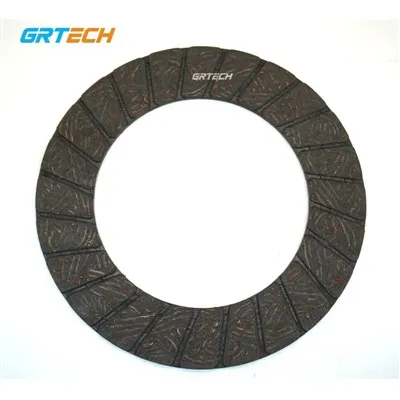
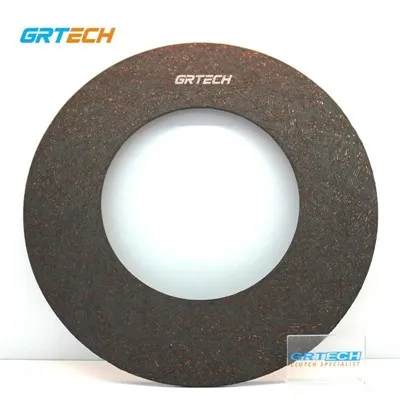
Asbestos type friction material
Materials used
Early brake pads used asbestos as a reinforcement material for brake pads. Asbestos accounted for 40-60% of the composition of asbestos-type brake pads.
main advantage
Asbestos fiber has the characteristics of high strength and high temperature resistance, can withstand high temperature of 316 ℃, and has strong tensile capacity.
main disadvantage
Every time a regular friction is performed, the brake pads will produce millions of asbestos fibers that are released into the air and affect health.
Because asbestos is heat-insulating, its thermal conductivity is particularly poor. Repeated use of the brakes will cause heat to accumulate in the brake pads. After the brake pads become hot, their braking degradation will increase. If the same friction and braking force are to be produced More brakes will be required, and if it reaches a certain level of heat, it will cause the brakes to fail. Therefore, the production and use of asbestos brake pads has been banned worldwide.
semi-metallic friction material
Materials used
Semi-metallic brake pads mainly use rough steel wool as the reinforcing fiber and important mixture. Steel wool has high strength and thermal conductivity, so semi-metallic brake pads have different braking characteristics from traditional asbestos-type brake pads.
main advantage
It has temperature control ability and can withstand high brake temperature, which helps the brake disc and drum to dissipate heat from their surface during braking, and the heat is transferred to the brake caliper and its components.
main disadvantage
After the brake fluid is heated, the temperature will rise. When the temperature reaches a certain level, it will cause brake failure and brake fluid air resistance. Moreover, this heat also has a certain impact on the brake calipers, piston seals and return springs, which will accelerate the aging of components.
In addition, its internal metal content is high and its strength is high. When braking, semi-metallic brake pads require higher braking pressure to achieve the same braking effect. The high metal content, especially at low temperatures, also means that the brake pads cause greater wear on the disc or drum surface, as well as greater noise.