

Friction coefficient and main performance of brake pads
The most important performance indicator of brake pads is the coefficient of friction (the coefficient of friction is a constant). Our national standard stipulates that the brake friction coefficient is between 0.35 and 0.40. The friction coefficient of qualified brake pads is moderate and stable, if the friction coefficient is lower than 0.35, the brake will exceed the safe braking distance or even brake failure, if the friction coefficient is higher than 0.40, the brake is easy to suddenly lock, there is a rollover accident.
It is the ratio of the friction force between two surfaces to the vertical force acting on one surface. It is related to the roughness of the surface, and has nothing to do with the size of the contact area. According to the nature of motion, it can be divided into dynamic friction coefficient and static friction coefficient.
Fs/ N =μs; (N is the vertical force, μs is the coefficient of friction, fs is the friction force), generally the greater the braking force required, the greater the vertical force is required.
The main performance of brake pads
01 High performance: high coefficient of friction (such as the Porsche 911GT3 Temington brake pad friction coefficient of 0.45, a high coefficient of friction brake pads), friction resistance is very large.
02 Safety: low thermal decline, good recovery performance, braking performance does not decrease on mountain roads and under high temperature and high-speed conditions. Maximize the safety of the vehicle. Ideal for use with mountain areas, high speeds and other road conditions!
03 Comfort: braking force balance, low noise.
04 Lower powder loss rate, brake pad wear formation powder is consumed, generally low powder loss rate means that brake pads can be used for longer.
Friction coefficient and main performance of brake pads
Popular Products

GRTECH 231010910 High Quality Clutch Cover for John Deere
231010910 12inches Tractor Clutch Cover Clutch Pressure Plate for John-Deere

GRTECH M104100-2 Excellent Clutch Kit For Mack
M104100-2 Clutch Parts Truck Clutch Kit for America Series Heavy Duty Truck

GRTECH 107683-4CB Good Performance Clutch Kit For MACK
Heavy Duty 14 Clutch assembly for 1-3/4 input shaft. 8 springs and 4 paddles for up to 680 Lb/Ft torque.

Grtech Excellent Racing Clutch Kits With Push/pull Designs, Twin/triple/multi...
Grtech Racing Clutch Kits conquer all motorsport challenges. Our range features push/pull designs,
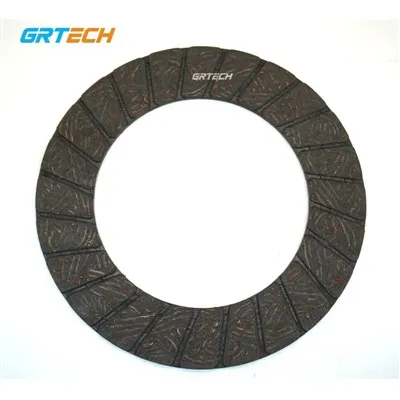
GRTECH GRT-0419A Factory Supply Clutch Facing For All Models
Grtech GRT-0419A clutch facing features steady friction performance with a small dynamic-static difference. It delivers
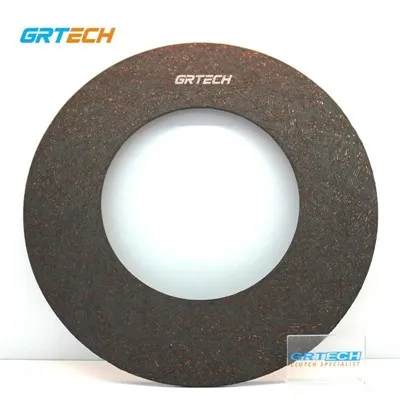
GRTECH GRT-510D High-performance Clutch Facing For All Models
Engineered by Grtech, GRT-510D clutch facing features advanced friction technology with copper-enhanced thermal