Factors That Affect The Lifespan of Your Brake Pads
Here are the most significant factors that affect pad life:
1. Driving Habits
Let’s say that you’re on the highway driving at 70 mph when suddenly, the car in front of you slows down.
You’re probably going to immediately press down hard on your brake pedal to bring yourself to a halt quickly, right?
Encounters like this can take a serious toll on your brake pads.
When you drive fast and suddenly hit the brakes, your vehicle needs a lot of stopping power to come to a halt. This can easily cause increased brake wear.
Driving your car slower means your brake pads won’t have to exert much force to get your vehicle to stop – and you can expect your brake pads to last longer due to this reduced brake wear.
2. The Type Of Brake Pads
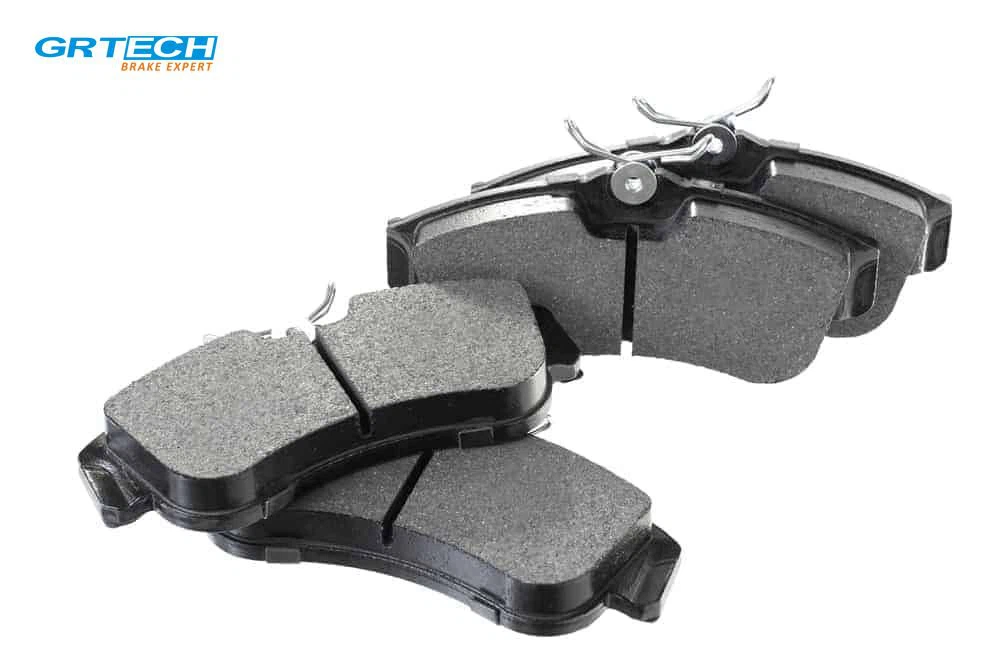
The type of brake pads you use also plays a significant role in how long they’ll last. There are three main types of brake pads that use different kinds of brake pad material. For example, your car may use an organic brake pad, a semi metallic brake pad, or even ceramic brake pads.
Organic brake pads are made of brake material like glass, fiber, carbon, rubber, and kevlar mixed with resins. They have the lowest lifespan of all three types of brake pads and are easily subject to brake fade.
Semi metallic pads (metallic brake pads) are made for performance with extended durability and a much better braking response than organic pads. You can expect a semi metallic pad to last for about 50,000 miles.
Ceramic pad car brake systems are found on luxury cars and are meant for comfortable braking. Carbon ceramic brakes aren’t meant for use in high-performance conditions but have a long lifespan of about 70,000 miles.
3. The Type of Transmission
What does your car’s transmission have to do with the brake pads?
If you have the right kind of transmission, you could probably extend your brake pad life.
Car owners with manual transmission systems don’t have to only rely on brake pads when slowing down. A process called engine braking allows them to slow down by downshifting gears – instead of activating their brake pads and wearing them down.
Note: If you own a car that uses an automatic transmission system, using engine braking is not recommended as you can end up damaging the transmission system.
4. Your Driving Environment
You might not notice it at first, but where you live (and more importantly, where you drive) can significantly impact your brake pad life.
Think about it.
If you live in a hilly area, all the climbs and drops you face will force you to use your brakes more often than you would in relatively flat terrain. Even regular heavy traffic situations can take a toll on your brake pads as you have to keep starting and stopping frequently.
5. The Condition Of The Brake Rotors And Calipers
Your brake pads are designed to work in tandem with other brake components like rotors and calipers.
If your brake rotors and calipers aren’t in good condition, they can easily affect your braking pad. A stuck brake caliper or a warped rotor can cause your brake pads to wear out sooner than usual.
Why does this happen?
When you have a stuck brake caliper, your brake pad won’t completely disengage from the brake rotor – so you’ll always be driving with the brake pads slightly engaged.
How do you know that you have a stuck caliper?
If you notice a burning smell coming from your wheels, it could be an indication of a stuck brake caliper.
On the other hand, a warped rotor can cause your brakes to feel jittery and less effective, which can eventually cause your braking system to fail.