Design and Mechanical Optimization of Racing Clutch Steel Plate Structure

Wave-shaped Elastic Structure: The typical wave-shaped steel sheet of this structure has a wave height of 3-5mm and a wavelength of 8-12mm. It absorbs shifting impact through elastic deformation. Research shows that for every 1mm increase in wave height, the energy absorption rate of the joint impact increases by 15%, but the response time extends by 0.02 seconds. The 2025 new split-type lip-rib structure steel sheet (Figure 1) further optimizes the stiffness curve: the planar part first compresses to provide initial connection, and the lip-rib structure intervenes when compressed to 60% of the stroke, increasing the axial stiffness by 40% while the U-shaped window design reduces thermal stress by 25%.
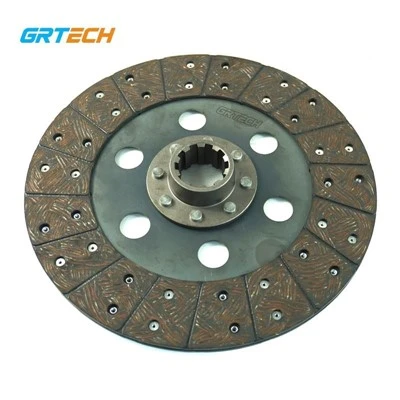
Multi-piece Overlay Scheme: endurance racing often uses 6-8 steel sheets + friction plates in an alternating combination to increase the contact area and enhance torque capacity. For example, Tilton Racing's 7.25-inch metal clutch uses 6 segmented steel sheets with a friction area of 220cm², capable of transmitting over 800N·m of torque, while the rotational inertia is reduced by 18% compared to the integral type.
Lightweight Design: Laser-cutting weight-reducing holes (diameter 3-5mm, spacing 10-15mm) reduces steel sheet weight by 12-15% while maintaining strength. Titanium alloy steel sheets are optimized through topology optimization, retaining material in key stressed areas and hollowing out non-stressed areas to achieve a 30% weight reduction while maintaining the same stiffness.
III. Surface Treatment and Friction Control
Coating Technology
DLC (Diamond-like Carbon) Coating: Through PVD process, a 1-3μm thick DLC layer is deposited, reducing the friction coefficient from 0.15 to 0.08, and extending the wear life by 5 times. However, note that DLC coating undergoes graphitization transformation above 400°C, so an efficient heat dissipation system is required.
Ceramic Coating: The 2025 patent technology of POSCO Yimju uses Al₂O₃-TiO₂ composite ceramic powder through plasma spraying on the steel sheet surface to form a 30-50μm thick wear-resistant layer. The high-temperature friction coefficient remains stable at 0.35-0.40, improving by 20% compared to traditional semi-metal friction plates.
Surface Roughness Control: The surface roughness Ra of racing steel sheets needs to be strictly controlled within 0.8-1.6μm. Excessively rough (Ra>2.0μm) will cause abnormal wear of the friction material, such as when sandpaper is polished to Ra=4.0μm, the friction plate life shortens by 60%; overly smooth (Ra<0.4μm) will reduce the initial connection friction force, and micro-texturing treatment (such as laser etching 0.2mm deep rhombic depressions) is required to optimize the contact state.