Clutch classification National standard GBT10043-2003
Automobile clutches include friction clutches, torque converters (hydraulic couplings), and electromagnetic clutches. Friction clutches are divided into wet and dry.
The fluid coupling transmits torque by the working fluid (oil), and the outer casing and the pump wheel are integrated into one body, which is an active part; the turbine is opposite to the pump wheel and is a driven member. When the pump wheel speed is low, the turbine cannot be driven, and the active member and the driven member are separated; as the pump wheel speed increases, the turbine is driven, and the active member and the driven member are engaged.
The electromagnetic clutch controls the engagement and disengagement of the clutch by the on and off of the coil. If magnetic powder is placed between the active and the driven members, the engagement force between the two can be enhanced. Such a clutch is called a magnetic powder electromagnetic clutch.
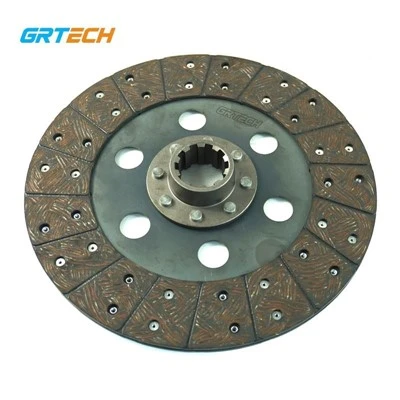
At present, most of the clutches that cooperate with manual transmissions are dry friction clutches, which are divided into single disc type, double disc type and multi-disc type according to the number of driven discs.
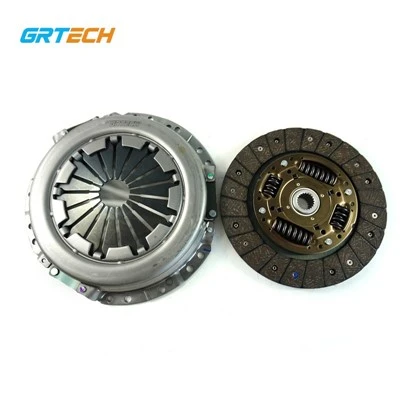
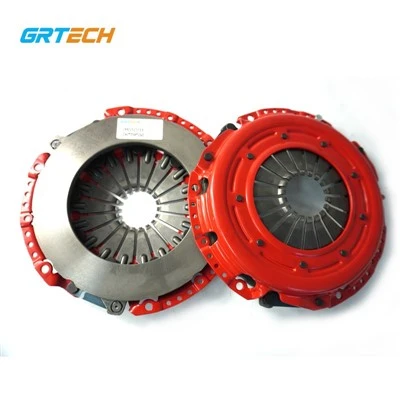
Wet friction clutches are generally multi-disc type, immersed in oil for heat dissipation. A plurality of coil springs are used as compression springs, and the clutches whose springs are distributed along the circumference of the pressure plate are referred to as circumferential cloth spring clutches (as shown). A clutch that uses a diaphragm spring as a compression spring is called a diaphragm spring clutch.