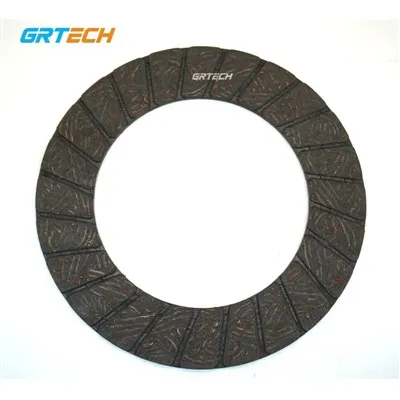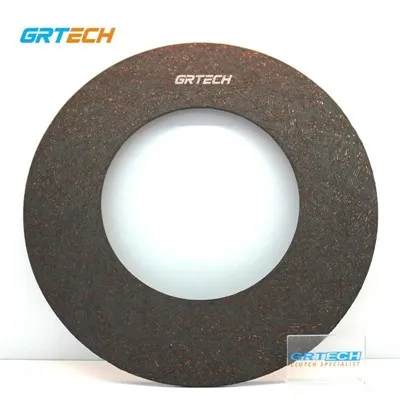
Metal-Ceramic Composite Process (with high-temperature-resistant ceramics as the matrix and metal phases for reinforcement)
The core is to achieve the combination of metal and ceramic phases through "batching → pressing → sintering", enhancing friction stability and wear resistance.
Raw Material Proportioning:
Metal Phase: Mixed elemental powders of Ni, Al, and Cr (Cr accounts for 24–26%, Al for 18–21%, and the remainder is Ni), making up 40–55% of the total formulation.
Ceramic Phase: Composed of TiO₂ (30–35%), Al₂O₃ (20–25%), ZrO₂ (15–20%, cubic crystal system powder with a density of 6.25–6.27 g/cm³), B₂O₃ (5–10%), and NiFe₂O₄ (the balance), accounting for 35–40% of the total.
Binder: Constitutes the remaining proportion to assist in shaping.
Mixing:
Metal powders, ceramic powders, and the binder are mixed in the specified ratio to ensure uniform distribution of components.
Compression Molding:
The mixed material is placed into a mold and pressed under a pressure of 245–255 MPa to form a disc-shaped green body.
Sintering Treatment:
The green body is transferred to a sintering furnace, where a holding pressure of 1.4–1.6 MPa is maintained. The temperature is raised to 780–850 °C and held for 2.5–3.0 hours.
Hot-press sintering fuses the metal and ceramic phases, creating a dense structure that imparts high friction coefficient, thermal conductivity, and mechanical strength.