Briefly talk about several brake pads of different materials
In terms of formula technology, there are: asbestos, semi-metal, and non-asbestos organic brake pads (NAO). The following is a brief talk about several brake pads made of different materials.
Asbestos brake pads
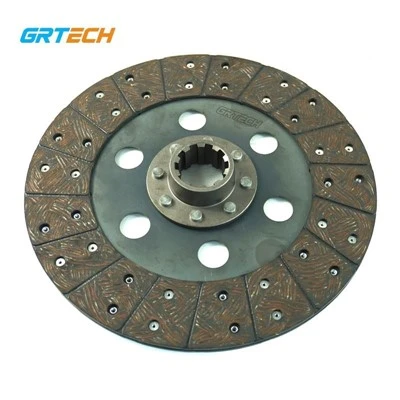
The original brake pads were made of asbestos material, because asbestos fibers have high strength and high temperature resistance, so they can meet the requirements of brake pads, clutch discs and liners. However, asbestos is poorly consumed and the powder produced is very fine and will float in the air and endanger your health. Asbestos has a particularly poor thermal conductivity. Usually, repeated use of the brake will cause the brake pad to overheat, and its braking performance will be greatly reduced. To produce the same A higher braking force requires more braking times, a phenomenon known as "brake shrinkage", and if the brake pads are too hot, it will cause the brakes to fail. When vehicle manufacturers and brake material suppliers decided to develop new and safer alternatives to asbestos, new friction materials came into being almost simultaneously. This is the "semi-metallic" hybrid and non-asbestos organic (NAO) brake pads to be discussed below.
"Semi-Metallic" Hybrid Brake Pads
"Semi-metal" hybrid brake pads (Semi-met) are mainly made of rough steel wool. From the appearance (fine fibers and particles), asbestos type and non-asbestos organic type brake pads (NAO) can be easily distinguished. In addition, they also have certain magnetic properties, and the powder produced by wear can be adsorbed on the inner wall of the hub to reduce Hazard to air. Steel wool has high strength and thermal conductivity, which makes "semi-metallic" hybrid brake pads have different braking characteristics from traditional asbestos-type brake pads.
For example: "semi-metallic" brake pads have high metal content and high strength, and high metal content also changes the friction characteristics of the brake pads, which usually means that "semi-metallic" brake pads require higher braking pressure to complete the same braking effect. The high metal content, especially at low temperatures, also means that the brake pads cause greater surface wear of the brake discs or drums, as well as noise.
The main advantage of "semi-metal" hybrid brake pads (Semi-met) lies in its temperature control ability and high braking temperature, which is poor in heat transfer performance compared to asbestos type and poor in cooling capacity of brake discs and brake drums Heat is transferred to the calipers and their components, whereas they help the discs and drums dissipate heat away from their surfaces during braking. Of course, if the heat is not handled properly, it will cause problems. After the brake fluid is heated, the temperature will rise. If the temperature reaches a certain level, it will cause the brakes to shrink and the brake fluid to boil. This heat also has a certain impact on the brake calipers, piston seals and return springs, which will accelerate the aging of these components. This is also the reason for reassembling the brake calipers and replacing metal parts during brake maintenance.