The car can drive on the road because of the rotation of the wheel. What should I do when the car stops? It is impossible for the driver to reach the ground like a cartoon to stop the car from moving forward. At this time, it is necessary to rely on the brakes on the car to slow down and stop the car.

(The brake system hidden in the wheel is an important device to stop the moving car.)
The brake device generates friction between the brake pad and the drum or the disc, and converts the kinetic energy of the vehicle during driving into heat energy consumption. Common brakes are available in "drum brakes" and "disc brakes". Their basic features are as follows:
First, drum brakes:
Two semi-circular brake pads are mounted in the wheel hub, and the "brake principle" is used to push the brake pads to make the brake pads contact the inner surface of the drum to cause friction.
Second, the disc brakes:
Use the brake caliper to control the two brake pads to clamp the brake disc on the wheel. When the brake pads grip the disc, there is friction between them
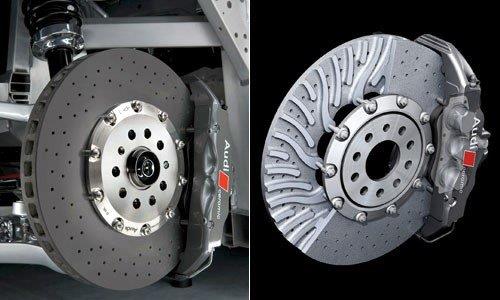
(The brake discs used in high-performance sports cars are mostly perforated ventilated discs with good cooling effect.)

(Cool air passes through the wheels to cool the brake discs)
When a car is driving on a slippery or icy low-friction road, if excessive braking occurs, the wheel will be locked by the brake device and lose grip, resulting in the vehicle losing control of the direction. In order to enable the vehicle to effectively control the direction of advancement on this dangerous road surface, the ABS "anti-lock brake system" was developed.
The ABS "anti-lock brake system" with more and more performance can also make the TCS-Traction Control System "tracking control system" and VSC-Vehicle Stability Control "vehicle stability control system" (equivalent to ESP). To control the tracking performance of the vehicle while driving, and to control the stability of the vehicle when cornering.