3550‑03‑011B Diaphragm Spring Product Knowledge
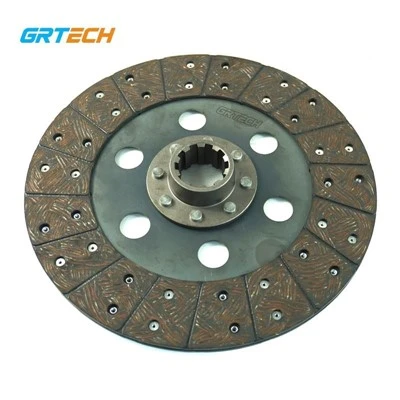
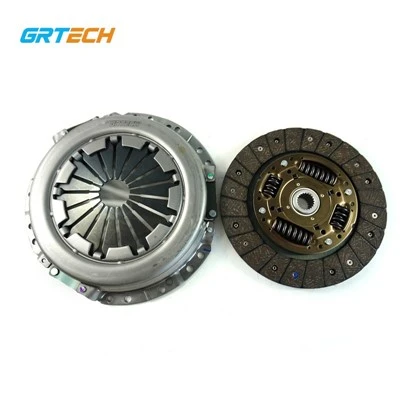
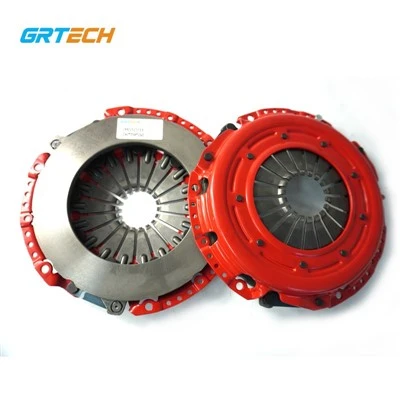
3550‑03‑011B is a push‑type clutch diaphragm spring, widely used in light‑duty trucks, agricultural machinery and construction machinery clutch cover assemblies. It serves as the core elastic compressing component of the clutch, functioning both as a compression spring and release lever.

1. Basic Information
Part Number: 3550‑03‑011B
Type: Push‑type diaphragm spring (the release bearing pushes the release fingers inward to disengage the clutch)
Applicable Assembly: Clutch pressure plate / clutch cover assembly; compatible with transmissions for agricultural machinery and light‑duty commercial vehicles
Core Functions
Engagement: Provides clamping load to press the friction disc for engine torque transmission.
Disengagement: The inner‑ring release fingers are pushed and deflected by the release bearing to release pressure on the pressure plate and cut off power transmission.
2. Structural Composition
Belleville Spring Main Body (Outer Ring): Conical disc generating clamping force, contacts the pressure plate end face for uniform circumferential force distribution.
Release Fingers (Inner Ring): Radially slotted elastic fingers. Stress‑relief holes are arranged at slot roots to prevent cracking under alternating loads. The release bearing acts directly on the tips of release fingers.
Support Points: Positioned inside the clutch cover by two support wire rings to form lever pivot points for force conversion.
3. Material & Process Key Points
Base Material: 60Si2MnA / 50CrV spring steel. Features high elastic limit and anti‑high‑temperature relaxation performance, resisting clutch operating temperature up to approx. 200℃.
Key Manufacturing Processes
Fine blanking: Guarantees dimensional accuracy of slots, inner & outer circles; burr‑free slots to avoid stress‑concentration cracking.
Quenching + medium‑temperature tempering: Achieves tempered troostite microstructure for fatigue resistance.
Pre‑setting treatment: Eliminates residual stress, stabilizes spring‑force characteristics and prevents spring‑force decay in service.
Surface treatment: Blackening / phosphating for rust resistance and improved environmental durability.
Critical Quality Control Items
Plate thickness tolerance and flatness; clamping load is directly determined by plate thickness.
Free conical height H; H/t ratio defines the spring‑force‑deflection characteristic curve.
Flatness of release‑finger tips: Excessive height difference causes incomplete disengagement, pedal vibration and vehicle shudder at take‑off.
Fatigue life: Bench durability test; spring‑force decay after repeated clutch cycles must be within allowable range.
4. Core Performance Parameters (For Selection & Inspection)
Clamping Load (Engagement‑point Load): Axial pre‑load after clutch assembly, determines maximum transmittable torque. Insufficient load → clutch slipping; excessive load → heavy clutch pedal.
Release Stroke & Release Load: Displacement and thrust required when the release bearing pushes release fingers to full disengagement position upon clutch pedal depression.
Force‑Deflection Curve (F‑S Curve): Typical non‑linear property of diaphragm springs. Clamping load drops slightly as friction disc wears thin, which is the major advantage over coil springs.
Quantity of Release Fingers: Affects load distribution. More fingers reduce stress on each individual finger and improve operating smoothness.
High‑temperature Relaxation Resistance: Spring force shall not drop drastically under long‑term high‑temperature clutch operation.
5. Assembly Notes
Push‑type design; two support wire rings must be correctly fitted, no missing or wrong installation.
Release‑finger tips shall be parallel to release‑bearing end face. Replace or correct parts with out‑of‑tolerance tip height; do not force assembly.
Avoid knocking release fingers. Notches caused by impact become initiation points for fatigue cracks.
Pressure plate, diaphragm spring and clutch cover are matched assembly components; do not arbitrarily interchange parts of different part numbers.
6. Common Failure Modes & Phenomena
| Failure Mode | Vehicle Symptom | Root Cause |
|---|---|---|
| Release‑finger crack / fracture | Clutch malfunction, hard gear shifting | Impact damage, improper heat treatment, overload shock, stress concentration |
| Spring‑force relaxation & decay | Clutch slipping, insufficient power, rapid friction‑disc burning | Long‑term high‑temperature exposure, unqualified material, missing pre‑setting treatment |
| Uneven release‑finger height | Shudder at take‑off, shifting jerk, incomplete disengagement | Stamping deformation, assembly stress, fatigue deformation |
7. Advantages Compared with Coil Compression Springs
Integrated component: Replaces multiple coil springs plus release levers, reduces part count and makes assembly more compact.
Good high‑speed stability; minor clamping‑force loss at high rotational speed.
Full‑circumferential pressure on pressure plate for even friction‑disc wear.
Slight clamping‑force drop with friction‑disc wear, delivering durable clutch performance.
8. Incoming Inspection Items
Visual check: No cracks, notches or burrs; no bent or knocked release fingers; intact anti‑rust coating.
Geometric dimensions: Outer diameter, inner diameter, plate thickness, free conical height, flatness of release‑finger tips.
Mechanical performance: Bench test for clamping load and release load; verify force‑displacement curve.
Random hardness sampling to confirm qualified heat treatment.
#GRTECH #DiaphragmSpring #clutchkit #clutchassembly #clutchplate #clutchdisc #releasebearing #pressureplate